 微信公众号
微信公众号

《当代西安作家十五人》英文版 连载8 | 范墩子《雁塔手记》Wild Goose Pagoda Jottings
所属分类:译家名品 阅读次数:304 发布时间:2026年03月15日 10:14:52
Wild Goose Pagoda Jottings
By Fan Dunzi
Translated by Tian Juan & Robin Gilbank
Proofread by Hu Zongfeng
Switching on my phone, the screen is swamped with news of Kenzaburo Oe’s passing, and I feel sad for the rest of the afternoon. In a dim corner of the room, a large beetle scuttles hastily, and when I open the window, an al fresco cinema is projecting images of a costume drama set in ancient times. Rising from my seat, I remove yesterday’s leftover Phoenix liquor from the drawer of the tea table, and two sips are all it takes for that rich melancholy flavor to tantalize my tongue. The begonia at the front of the table is in full bloom, its flowers resembling a blood-red cloth that dyes the sky. I take out the works of Oe that I have collected before and type a post on my Douban social media app: “He has returned to the dreamlike, deep and tranquil mountain village in Shikoku.” In the vast depths of the valley, the dense forest stretches to the ends of the world, and the howling of wild beasts in the treetops can be heard at any time.
Two months ago, I moved here from Taiyi town. This is an old compound with a history of nearly thirty years. It is called the Myrtle Garden Residential Complex and stands on Electronic Avenue in Wild Goose Pagoda District. The complex is serene and quiet, being mostly populated by the elderly. For the previous twenty or so years, I lived in Taiyi, where I taught writing courses at a private university. I grew up in an urban village in Ba Bridge District and after leaving home at the age of sixteen never returned. Every last trace of that narrow community, named South Window Village, is now gone, having cleared to make way for lofty buildings. Later on, I chose “Southern Window” as my pseudonym when I began to write novels.
I quit my job at the university and then moved here, making up my mind to become a full-time writer. This gave me enough income to make ends meet.
Waking up from a fragmentary nightmare, I return to my desk, light a cigarette, take a deep drag, and exhale slowly. The cawing and arguing of elderly people echoes up from down below. My sense of impatience seems to drag on as if I am still immersed in a dream. Gazing at the white light emitted by the desk lamp, my mind feels empty. I think of Rainbow Liu again. Lately, she has always been on my mind. My right eyelid keeps on twitching. I thought I had long forgotten about her. But since moving here, Rainbow’s face constantly appears in my mind’s eye. A tired and timid face. She was my wife until she perished in a road crash eight years ago. Eight years. I still can’t figure out why she was on the Baomao Highway that morning.
Rainbow often appears in my dreams, telling me that she saw an azure dragon on the highway, coiling itself up on the emergency lane near the Taiyi Exit. Mist was everywhere. That creature was huddled tight and shivering. Next to it, there were gigantic lotus leaves erect in the air. As she approached, the dragon did not flee but simply lifted its head and gazed at her intently. Mustering up her courage, she reached out and gently stroked its trembling body, which was wet, cold, and smooth, evoking a strange sensation. She clearly heard a low, mournful howl from the abdomen of the beast. The raindrops grew denser and eventually, both she and the azure dragon disappeared into the mist.
On the morning of her accident, there was also heavy fog.
Was she explaining her death to me by means of this dream?
I found myself at a loss. For a period of time, I detested her.
Who could ever have foreseen that she would walk out onto the highway that morning? For years, she had maintained the habit of rising early, taking a stroll in the forest to the south of the apartment at the crack of dawn, returning at seven to make breakfast, and then cleaning up and reading on the balcony. That morning was like any other, but as I woke and glanced out of the window after she left. I found that mist was enveloping the mountain, creating a vast expanse of white, which brought a hint of sorrow and grievance. It was the thirteenth year of our marriage. At eight o’clock, she hadn’t returned, and when I called her, there was no reply. I didn’t think much of it, as I had classes in the morning, so just grabbed some bread and drove down the mountain. Throughout the morning, I felt somewhat uneasy, with the compulsion to look out of the window. The thick fog made it impossible to see even the trees nearby clearly. Normally, she would send me a text message if something was up, but not that day. As soon as my class ended at noon, I called again. Still no answer. My mind was buzzing, and I started to worry.
Returning to the apartment, she was not there. She had forgotten to close the window when she left, and chilly air had seeped in, making the room somewhat dim. I kept on calling, but still with the same effect. Had she bolted? The thought crossed my mind, though I couldn’t think of any reason why she would choose to leave me in such a way. Could she have a lover outside? This thought filled me with shame, but clearly, my emotions could not be laid out in a straightforward fashion. In every respect, she was a competent housewife, taking care of the home and attending to my daily needs without fault. That was leaving aside the matter of children. Until now, we still had not become parents, and that was perhaps our sole source of regret. She always spoke very sparingly, and with my busy schedule of teaching and writing, I seldom took the time to read her mind. Thinking about this, I felt a twinge of self-reproach. But even so, I was convinced she would never betray me.
There was no sign of her in the woods, and I even extended my search to scour the nearby villages, but still, she was nowhere to be found. The phone continued to go unanswered. My heart began to pound, my head felt light and dizzy, and I was a little scared. Could something have happened to her? The raindrops grew denser, and the mist began to recede into the distance.
I rushed into the forest area once again, where the air was damp and cold and the grass thick. Even so, there was a narrow trail leading deep into the Qinling Mountains. The Taiyi River was narrow, flowing away into the distance in solitude, its banks piled with countless stones. She would often sit here, gazing vacantly at the distant mountains. I remember on the night we were married, she lay in my arms and told me, "Someday, I’ll give you a whole brood of children. Is that all right?"
Sitting on the rain-soaked stones, while confronted by the impenetrable tangle of tree trunks, my heart brimmed over with memories. The rain that rinsed my face somehow allowed a sense of calm to set in. I picked up pebbles, pelting them continuously into the swift-flowing torrent and then watched how they vanished with the current. In the fifth year of our marriage, she fell pregnant once, but during the sixth month, a hospital check-up revealed that the baby was stillborn. Perhaps right now she is sitting at the entrance to some cave, waiting for our child to come sprinting towards her from the heart of the forest.
“Mama,” a call emanates from behind a rock.
Under the curtain of rain, her eyes film up with tears and she must chase towards where the trees are more tightly packed.
Each time, she would pick up a small stone, which she would bring home and arrange on the balcony.
That is how she came to hear the word “Mama” being shouted from up there.
Sometimes, she would also bury the stones in the vegetable garden below the apartment.
Once I mentioned adopting a child to her, but she shook her head and refused without a second thought. She was adamant that every child is a piece of flesh from its mother’s body and brandishes a burning candle with which it will try to search for that mother in the sky. If the child had still to be conceived, this meant that it had not found her yet, so she would have to keep on waiting. After that, I never brought up the topic again. I accepted the fact, and in reality, just the two of us sharing our lives was a fair alternative.
When I first met Rainbow, I was a first-year junior pupil at Southern Window Middle School. At that time, she had just moved to the village with her parents who were renting a place next to my house. Every time I left for school, I would always run into her, and gradually we became familiar with each other. Southern Window Village was quite famous in the Ba Bridge area for its cheap rent. People from all over the country were attracted here, where life was simple. Living here always gave them the feeling of having been thrown into the vast sea, of being forgotten by others lke they had vanished into a noisy crowd. They were engulfed by the comings and goings of folk. As for me, my entire adolescence saw my heart encrusted with a thick layer of shame.
That shame came from my mother. Ever since I was born, I had lived here, and my mother never told me who my father was. Every time I asked her, she would tell me to shut up in a harsh tone, and sometimes even clouted me on the mouth. She seemed not to care about this matter. But whenever my classmates asked me what my father did for a living, it felt like a nail had been stuck in my throat and no words would come out. From when I was young, I accepted the fact that I was a bastard kid in Southern Window Village, though I couldn’t bear having people humiliate me to my face by talking about my mother. I hated it. I hid myself away and cried.
“Iron Post doesn’t have a father because his mother doesn’t even know who his father is.”
“Why wouldn’t she know?” the senior students would ask with a mischievous grin.
“Because there were too many men, and Iron Post’s mother can’t be sure whose child he is.”
“What did Iron Post’s mother do before?” The light in that student’s eyes seemed to brighten.
“A hooker.” That word detonated in my mind like dynamite, shaking me to the core.
“It’s said his mother caught a terrible disease, and it’s contagious.”
“Who knows, maybe Iron Post has it too. It’s better to give him a wide berth.”
When I was in Southern Window Village, I would hear this type of gossip every few days almost without fail. Back then, my chief hope was that people would forget about this or I would grow up quickly so I could leave my mother and this terrifying place behind forever. I loathed being scrutinized with strange looks by others, and deplored all the familiar faces in the alleys. I even detested that portly landlady who never had a kind word for me.
I was not a registered local resident. I didn’t have a house to call my own. My mother and I had always rented that dark room. All my shame resided in the alleys of the village. I feared going home and feared encountering people; only the stray cats knew my shame. Deep down, I even wished my mother would disappear from the world.
Rainbow’s father was a stroke survivor. Every morning, he went out and ambled up and down the alleys while there were still few people on the streets. Just past seven o’clock, he would return home punctually. The reason they moved to Xi’an was that after receiving his diagnosis her father didn’t want to live in their home village anymore. At the very beginning, her mother was reluctant to follow, but she couldn’t stand up to his nagging, and eventually moved from the countryside to the urban area in order to preserve his pride. Of course, all of this was related to me by Rainbow long after the fact. By the time she shared these stories, we were already an item.
Rainbow’s father went missing several times, but we always managed to find him and bring him home. He often got his directions mixed up after heading outside. Once, when we found him, he was sitting behind a dustbin weeping. On seeing us, he staggered to his feet and followed us back, with a gurgling sound in his throat.
In the year I was in ninth grade, a sandstorm swept through Xi’an. People hurried about, and not a single bird could be seen in the sky, only the wind and particles swirling about the streets. As usual, Rainbow’s father set out with his peculiar gait. I was sitting on the steps, lost in thought. The sun had not yet risen, and even if it had, it would have been hard to see it clearly. I watched his back gradually disappear into the sandstorm. More than an hour later, Rainbow ran out to ask me:
“Did you see my dad?”
“Heading west,” I replied.
“Didn’t you see where he went?”
“To be honest, I couldn’t see clearly. The weather was too bad.”
“Oh, he should be coming back soon.” Rainbow stood in front of me. Her large eyes disclosed a hint of shyness in the attitude of that gaze. Every time I looked into them, I always sensed she had many stories hidden in her heart.
“He’ll be back soon,” she repeated.
But noon came around and her father had not appeared. Nor did he arrive back by evening. We searched every corner of Southern Window Village and the adjacent streets without any sign of him. Based on our descriptions, the vegetable vendors and convenience store owners in the area replied that they had seen him, but due to the damned weather, no one could give us clearer details. All they remembered was that he was heading westwards. No useful information was offered up. The police from the local station came to make a report, searched with us for a while, and then left. They told Rainbow and her mother to wait, promising to inform them as soon as there was any good news.
But Rainbow confided in me covertly that her right eyelid had been twitching continuously, and she had a premonition of misfortune. She knew her father wouldn’t be coming back. She sat on the steps by the door, her profile turned towards the yellow sand lifted by the wind. Her gaze seemed calmer than usual, without a trace of sadness. I couldn’t figure out what she was thinking.
As it turned out, her father never did come back.
Rainbow’s mother cried with red, tear-swollen eyes, “Even when a gust of wind blows, it leaves a trace of sand or soil on the ground.”
Those days, Rainbow and I were together every day, not attending school. We sat on the rocks in the Ba Bridge Wetland Park, watching the flocks of birds in the sky, listening to the sound of the river. Sometimes we would exchange secrets, sharing stories from our childhood. She said her father was a capable man in the village, one of the first to open a store, yet it didn’t make much money. Her father then learned the carpentry trade, rented a space at the entrance to the village for making coffins, and later went to Dongguan for two years in search of more opportunities. When he returned, he opened a supermarket in the town, and just as the business was picking up, he was suddenly diagnosed with a stroke. If one talks about the sky falling down, it is certain to happen. She knew he couldn’t accept such a fate and recalled how she would wake up to find him standing at the foot of the city wall, his face a picture of loneliness. She even dreamed of her him tumbling into the Ba River and being swallowed by the water.
As she told me tales about her father, a peculiar surge of emotion rose in my heart. This was hard to articulate precisely. I envied her for having so many memories of her father, and I sympathized with her over his sudden disappearance. But more than that, it seemed to deepen the sense of shame in my heart. I was even more embarrassed about my own lot.
It took about half a year for Rainbow’s mother to come to terms with her husband’s disappearance. She stopped putting up missing-person posters on the streets as well as making relentless trips to the police station. She spontaneously suggested taking Rainbow back to their home village. I guessed that she actually wanted to flee from Southern Window Village. Rainbow was unwilling to leave and even raised the idea of dropping out of school. After a period of conflict between them, her mother finally agreed.
Once she turned her back on education, Rainbow undertook odd jobs at a below-stairs beef noodle restaurant in the Jingtailai residential area. This was within convenient walking distance of our community. After settling Rainbow’s affairs, her mother returned to their home village.
By the middle of May, with only a month left until the high school entrance exam, I dropped out as well. I didn’t look for a job; instead, I took the bus around the city every day. I became the most leisurely person in Xi’an. Sometimes, I would sit in the Bell Tower Bookstore reading novels for half a day. During that time, I read books by Dickens, Lu Yao, Woolf, and Schiller.
Sometimes, leaning against the bus window, staring at the city wall, I would dream of becoming a writer.
Sometimes, I felt inferior and helpless, but at other points, I was seized by the notion that I could create a world of my own out of words.
Sometimes, while wandering alone, I even felt the urge to compose a novel.
Could I pull it off? I could give it a go in secret. Could I write well? I should persevere. Write, just write.
I began to take a liking to those outlandish authors, such as Kafka, Joyce, Kenzaburo Oe, and Proust. Of course, I couldn’t understand them, but I was completely infatuated with their works. I also hoped that one day I would awake to find myself transformed into a ginormous beetle. A giant insect with sharp, saw-toothed forelimbs.
Would such a creature be able to zoom beyond the sight of people?
Would such a creature be able to surpass the suffocating sandstorm?
To this day, I still cannot fathom Rainbow’s choice. On that foggy morning, what was she searching for, and what was she giving up? She took the asphalt road we often walked along to get onto the Baomao Highway. Eight years have proved insufficient for me to ascertain the reasons behind this. As I walked back along the small path from the forest area, I remembered that day of the sandstorm years ago when we combed the streets trying to find her father’s whereabouts. I remembered the frustration, the despair, the anxiety, the sense of being lost, the panic, and the feeling of falling.
During the years when I published my novels one after another, Rainbow took meticulous care of my daily life. She didn’t read much of my work because after poring over a few of my short stories, she found them oppressive. That duly intensified her sense of loneliness. She preferred the works of authors like Zhou Guoping and Sanmao, especially in the years immediately preceding the latter’s car accident. Back then she would read Zhou Guoping’s books over and over. Sometimes she would ask me about the meaning of my writing and also ponder over the reactions of my audience. “Don’t they feel despair after reading them? You write so cruelly.” She would often say that.
After we got married, she quit her job as a salesperson at a brand-name clothing store. During that time, several of my novels were bestsellers on the market, so the royalties were enough to support our family. We visited Sayram Lake in Xinjiang, and Altay. Watching her stand in a meadow full of wildflowers, calling out into the wind, I lay on the ground. I could lift the rising sun in my cupped palms. Under that glorious radiance, I experienced a kind of happiness I had hitherto not known. Even so, I believed she was a melancholy woman.
That spring, we were on a bus heading to the Xiaozhai Bookstore for a promotional event for my novel. As we passed Greater Northern Avenue, she suddenly stuck her head out of the window and looked back. I tugged at her clothes to remind her that it was dangerous, but she paid no attention. Then, with wide eyes, she said she had spotted her father. Looking into her terrified face, I tried to recall his features without any success. I couldn’t remember the face that I used to see so often. The only details which lingered in my mind were his bald head and that light blue jacket he often wore.
I told her that she must be hallucinating. Over the years, we had long accepted the reality that her father had probably lost his life in some accident. Yet she insisted on getting off the bus to look for him. I glanced at my watch, realizing that we might be late for the event. I held her tightly, comforting her. She covered her face and sobbed. Tears kept sliding down her cheeks. She shivered, huddling in my arms. The bus was crowded, with indifferent faces and dull expressions. Outside the window, there were still more crowds, a jumble of backs, and we could smell an infinity of life stories.
For me, the event on that day seemed to drag. I kept glancing at Rainbow sitting in the last row, but the distance was a little too far for me to make out her expression. How could a young person who hadn’t even finished junior high school became a bestselling author? The story of my writing career. Very dull. The media kept hyping it up. They seemed to be sending a signal to the public: a person from the grassroots might find success through their own hard graft. People like to hear that, to relay such a story. Long queues lined up for the book signing. The readers were excited, taking photos and posting them on social media. Halfway through the signing, I looked back and found that Rainbow wasn’t there anymore. By the time the event was over, it was already late in the day.
I called her and it took ages for her to answer: “I’m just strolling on the street, I’ll come back later.” I knew she was upset, always having bottled up so many things. Upon leaving the bookstore, Chang’an Street was jammed with cars, and while waiting for the bus, I made another call to her. She said she would head back right away. Suddenly, I thought of my mother. For many years, I had purposefully had no contact with her and never returned to Southern Window Village. I hated her. But at that moment, did I still hate her? The streetlights outside were particularly dazzling. I was not sure. I didn’t know what I thought.
In fact, I had learned something about Rainbow from her mother. Throughout the period of time before we got married, she had repeatedly proposed that I should try to find a way to get in touch my mother. But I refused out of hand, regardless of how selfish and heartless that might make me. Rainbow’s mother said that she had been to Southern Window Village two years previously, and by that time, my mother was no longer there. Who was living in that dark room in which my childhood was entombed? She learned from our landlady that my mother had gone to the South a year before that. She took her luggage with her, but no one knew her exact destination. Not even the dogs at the entrance to the community could tell.
Talking about leaving seems to invite someone to vanish. To Southern Window Village, she was insignificant. To those young people who once humiliated and abused her in front of me, to the street where we once made our home, we were even less than nothing. Once you were gone, you were gone; once you disappeared, you had disappeared. Such was life.
Without warning, tears trickled down my eyes. Fortunately, it was already dark outside, so no one could see me sitting in the back row, crying. I felt wronged and heartbroken, and this injustice extended to my mother. At that moment, it seemed as if all the hatred had evaporated, but I actually knew that there was still a deep, dark river between us. Maybe she hated me even more, despised the fact of my birth as well as my absconding. I felt even more ashamed at this thought. I covered my face and wept.
The whole city was shaking on account of my tears. I perceived Rainbow’s father lying on the empty ground in front of the People’s Bank, reading yesterday’s evening newspaper. From time to time, he would lift his head to stare across at the People’s Mansion. I pictured Rainbow anxiously searching for him in the crowd. Her face was slightly flushed with disheveled hair, her neck slick with sweat. On her face, one could read shock, fear, loss, and anxiety. She clearly stood out from the crowd, yet there was a certain composure about her. People were looking at her. But in their hearts, she was just an ordinary woman. That was all. Even if she had lost a loved one, what of that? In this city, incredible things happen every day. This is the city, this is life, this is our sky. Soon enough, pedestrians stopped paying attention to her.
One Sunday in the fifth year of our marriage, Rainbow’s mother and a middle-aged woman in a bright red coat came to our home. After chatting for a long time, I learned that the portly middle-aged woman was a necromancer from the countryside who had something of a following in Rainbow’s home-village. With candor, she told me the reasons why my wife and I could not bear a baby. She said that the date of our wedding was inauspicious, that Rainbow had encountered an intractable dilemma, and that she was possessed by a ghost. She claimed to be able to see a white cat lying on our bed. That made my hair stand on end.
“What era are living in? Why are we still clinging onto feudal superstition!” I exclaimed.
“The Queen Mother of the West is speaking. Please don’t interrupt fecklessly. Now I’m no longer myself. I’m the Queen Mother of the West.” The necromancer intoned these words with widened eyes. Rainbow fixed her gaze on me. My heart was tweaked with amusement.
“Shh. Listen to the Queen Mother of the West,” Rainbow’s mother also flashed a disapproving expression at me.
Burning some touch paper and incense, the necromancer spread the grain and cereal from her pocket into every corner of the room, murmuring some long and incomprehensible words. Rainbow and I knelt in the living room, also burning paper and sprinkling liquor into the air. The woman was dancing in a strange way in front of the bed, casting out demons and making a fire. There was a buzzing sound in my ears. Rainbow lowered her head.
“The white cat has departed. It has been lying on your bed for a long time,” the necromancer informed us.
“May I speak now?” I asked before giggling.
“You may. The Queen Mother of the West has left, and I am back to being myself.”
“Where has the white cat gone?” Rainbow looked up and wanted to know, with a tired expression on her face.
“Don’t ask what shouldn’t be asked,” the necromancer replied gravely, her sweat-soaked hair sticking to her face. One could tell that she was not quite at ease in our house. I poured her a glass of water.
That night, Rainbow had a persistent headache and shivered in my arms. She was convinced that she could see a pair of animal eyes beyond the window. Every time her own eyes encountered them her head would sting. She pressed her skull against my chest, her eyes tightly closed. I turned to look out of the window, where the lights were twinkling as usual. As dawn approached, she woke up and her headache was gone. This time, she looked in the direction of the window, but saw nothing. By the end of the month, she found out she was pregnant.
Rainbow said that the Queen Mother of the West had put in an appearance.
Rainbow insisted that the child had found her in heaven.
Rainbow brought leaves gathered from the park. When she had nothing else to do, she would stand in front of the windowsill and try to come up with a name for her child. She would write it on a leaf, then raise her arm and throw the leaf into the air.
Rainbow said that every name carried a story, and when children in heaven saw these leaves, they could see themselves playing in the wind. The leaves with names on them were also looking for the child holding a candle in heaven.
But in the end, the child left us, returning to heaven before even being born, holding a candle, bawling tears while shouting out for its mother. The fetus’s heart had stopped. The doctor related the situation with a hint of sympathy as he looked at us. I supported Rainbow’s arm for she could no longer stand. As we left the hospital, the sun hung overhead, her face being sallow as wax and her expression sorrowful, with a trace of imperceptible despair at the corner of her eyes. A dog ran past us and I swallowed the saliva in my mouth.
After the loss of the baby, Rainbow fell into a depression. Gone were her appetite for food and drink. She was neither talkative nor angry. She slept for spells of less than two hours and sometimes had insomnia for the whole night. Later, she had to rely on medication. After I went to the university to teach, she would sit in the empty lot behind the apartment, lost in thought. The area was untended and overgrown with weeds. One time, when I returned from class, I found her sitting on the verge, clutching the fairy tale storybook Until the Beans Are Cooked by Naoko Anzai. An old glass bottle was planted in front of her with an encirclement of small stones. She was reading the fairy tale aloud to the bottle.
I approached her and she looked up briefly before continuing to read in a soft tone. Her voice was faint, drowned out by the chirping of the insects, yet I could still make out what she was reading:
Little Night doesn’t have a mother.
Not long after Little Night was born, her mother went back to her parents’ home, which was a village with beautiful plum blossoms, located beyond many mountains. However, not a single person - not even Little Night’s father - had been there.
I stood there and listened to the sad story until I couldn’t hold back my own tears. Little Night’s mother was the daughter of the mountain witch, or else she was just a gust of wind. I embraced Rainbow, who trembled in my arms, gazing towards the distant mountain ridge as if she could see our unborn child, spreading out its arms and rushing across the suspension bridge, darting towards the mountain witch and becoming an authentic gust of wind. The sound echoed like the whistling of a flute.
For about half a year, Rainbow remained in this state. I could relate to her sorrow. Late in the following spring, as the weather grew warmer and various flowers bloomed on the trees, Rainbow suddenly told me that she had found catharsis and apologized for having let herself plunge into such a state, which had caused me to suffer together with her. She asked me to go out with her to the spacious grassland on the mountain slope near our apartment. This was not far from the Taiyi River and an area of higher elevation, where wildflowers let off a delicate fragrance and the birds chirped without end. She dug a hole about half a meter deep with a spade and then buried the glass bottle into which she had previously read stories. She said she had put all her favorite stories into this bottle for the child, so that if the child found it in heaven, it would be able to hear the stories and the voice of its mother. Still I turned away and my tears ran down.
We buried the stories in the earth, and the stories took root. Next year, they might sprout new buds in this seldom-trodden place, where the stories could bloom and bear their fruits, carrying the face and voice of Rainbow, along with many dreams that had vanished into the grass. Rainbow added a few stones on top of the burial mound.
Later on, Rainbow was buried there as well.
Later, fresh wild grass covered that spot once more.
Later, Rainbow could tell stories to our unborn child every single day.
I still remember the phone call I received from the traffic police department. At that moment, I had just walked down to the entrance of the apartment. All at once my chest was aching for no apparent reason. It was still raining, and Professor Liu Jie’s elderly mother was standing under the eaves of the first floor, transfixed by something in the distance. There was nothing special in the distance - just the usual faded walls, a solitary poplar tree, and the emerald green mountains. The traffic policeman told me that there had been an accident at the Taiyi Palace Entrance to the highway. They found my number on the deceased’s phone and asked me to come over to identify the body immediately. Raindrops stuck to my face, and I stood there stunned for a second, my body numb, unable to make a sound. Looking up, I noticed the old lady leaning against the wall, watching me.
Turning around, I sprinted towards the entrance to the highway. The rain intensified, drenching me to the bone. Rainwater and sweat mixed together, running down my forehead, and as I ran, I had to wipe my eyes with my sleeve. What appeared before me, however, was the same expression Rainbow wore on the bus when she said she had caught sight of her father. That look of terror and anxiety seemed so close, as if it had only happened six months ago. Perhaps it was just the details I had imagined. In fact, it didn’t exist. It never happened. By the time I reached the entrance to the highway, the fog was getting thicker. Rainbow too must have been walking through fog as thick as this in the morning.
On such a tranquil morning, what could a middle-aged woman possibly be thinking of when she came to be swallowed by the dense fog? Maybe she was remembering her father who got lost in the sandstorm, or the baby who was carried away by death before it was born? Or maybe she was thinking about nothing at all? Looking at the body covered with a white cloth, I couldn’t believe it was my wife, Rainbow. Not a single tear dropped from my eyes. Her expression was as it always had been, disclosing no tangible sign of sorrow. Yet, I could still sense a figment of bitterness within it, just like that uneventful morning.
Rainbow’s terminal expression remains forever etched in my memory, and has been immortalized in my later novels. So calm, so ordinary, yet it was indeed the face of death. I often think back to that morning, but I still can’t piece together why she would walk onto the highway on a dawn like that one. I don’t believe she committed suicide. But whatever I believe changes nothing. No one can alter that morning, nor all the sudden fantasies and dreams that came with it. Walking through that thick fog was like traversing a dream from which one never awoke.
Three years after Rainbow’s death, I published a novel entitled The Woman Who Disappeared into the Fog. The book was well-received and to this day it is my bestselling work. People followed me to the scene of the fog, tracing the disappearance of a middle-aged woman. They were curious about seeking an answer. Now, as I study her photograph, I feel a profound sense of void, as if she had never been a part of this world. It’s just a face shrouded by death. She only lives on in my stories, where the fog persists, and she keeps walking further on into the distance.
For a long time, I forgot about her. I went to classes, lived a solitary family life, wrote novels, and drank. There was a new order, new sensations, new memories, and new faces. I only shuttled back and forth between the school and my apartment, severing contact with acquaintances. Over time, people forgot about me, and even I was insensible as to my existence. It was the feeling of having disappeared, like vanishing into the chirps of the birds, dematerializing at the end of the highway. I remember when I was a child in Southern Window Village, I often had that feeling too, of being swallowed by the village alleys, of being buried by the sound of passing footsteps. This strange sensation gave birth to an illusion: Rainbow and I were for ever more in the same place, and on that same foggy day.
After moving to Wild Goose Pagoda District, I took a trip back to Taiyi. In the place where she and the stories she planted for our child were buried, the weeds had grown to half the height of a person. Wild grass now covered the stone monument I had subsequently erected. I burned paper for her, burned some of my novels, and talked to her a lot. I told her everything: the messages she passed to me, the dreams in which she appeared, my gratitude and resentment towards her, and many interesting thoughts. She sat on a stone by the Taiyi River, resting her cheeks in her hands, listening in silence. For a moment, I saw her leading our child towards me as well. Of course, she still appears in my dreams, still telling me her stories on foggy days.
At that time, I thought, our story was still ongoing, being far from reaching its end.
About the Author:
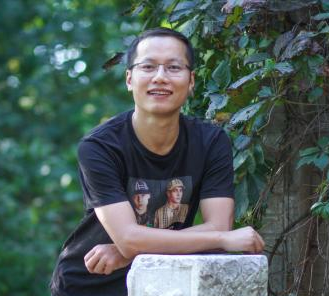
Fan Dunzi, born in Yongshou, Shaanxi in 1992, is a representative of the 10th National Congress of the Chinese Writers Association and a professional writer at the Xi'an Literature and Art Creation Research Office. Published multiple works such as The Age of Lyrics, Go to Baikal, Tiger Face, I Have Never Seen a Sparrow, Novel Notes, etc. Has won awards such as Shaanxi Youth Literature Award, Dianchi Annual Best Novel Award, Chang'an Prose Award, and East China Literature and Art Book Award.
About the Translators:

Tian Juan, associate professor, Master’s Supervisor. Specializing in British and American literature and culture, as well as literary translation. She is currently a member of the Shaanxi Translators Association and a member of the university's Academic Committee. She has presided over 3 provincial and ministerial-level research projects and 2 horizontal projects, and participated in 2 projects funded by the National Social Science Foundation. Published the translated work “European Culture”, edited two textbooks, and published eight papers in CSSCI and core journals.
Hu Zongfeng, Robin Gilbank (Refer to the previous introduction)