 微信公众号
微信公众号

《当代西安作家十五人》连载4 | 吴克敬《暖怀》Warm Bosom
所属分类:译家名品 阅读次数:323 发布时间:2026年03月02日 13:41:51
Warm Bosom
By Wu Kejing
Translated by Xie Junping & Hu Zongfeng
Proofread by Robin Gilbank
Warm Bosom was the name her mother gave to her since she was pleasant and warm to hold in her arms.
“Warm Bosom”, “Warm Bosom”, “Warm Bosom”, she grew gradually to maturity amid the sound of her mother calling to her. This continued even as she prepared to leave her and go off with a man. Then, she was struck by the urge to know why she had been so named. Her mother explained how as she nursed the newborn babe it gave her a warm feeling and hence decided on that title.
In her mind, Warm Bosom was sure that it must not have been so straightforward as this. Or, it might have been straightforward at the outset, but over time the more her mother persisted in crying out for “Warm Bosom” in a sad tone, her name accumulated various connotations. Warm Bosom was certain that there was some truth behind her guesswork. It was ultimately confirmed. On the day before her wedding Tailor Feng from Phoenix Town came to her home to deliver her bespoke matrimonial outfit. He had wrapped the garments in a bolt of cloth, and invited Warm Bosom to try them on. She was reluctant. It was not only that she did not want to comply, but she stared at that bundle of red wedding clothing as if it might burn her the moment she put the items on. Her mother read her thoughts and sent Tailor Feng on his way. She herself assumed charge of her daughter’s fitting.
Before her mother, Warm Bosom had always acted capriciously and with petulance.
On this occasion, she was also itching to be capricious, but was unable to muster this attitude. How could she carry on in that way when she was about to leave home on another man’s arm? Warm Bosom curbed her instincts, and allowed her mother to remove her old clothes in favour of the wedding attire.
The sheer brightness of the red colour was enough to pierce onlookers’ eyes.
After the mother supervised the fitting, she rotated her daughter twice. “Tailor Feng's craftsmanship is the best in Phoenix Town,” she exclaimed. “This wedding frock has turned my Warm Bosom into the most eye-catching of brides!” After speaking these words, she could not control her chattering tongue and had many a stored-up word to pour out for Warm Bosom’s benefit.
“Warm Bosom,” she said. “You should know, as women we are always being clenched to somebody’s bosom. No matter what the hour, our arms should never be empty. Of course, this means we are neither too hot nor too cold. Just think of it. Your mother carried you inside her body for ten months. Every day of that pregnancy my belly grew bigger and bigger until the point that I couldn't even see my feet when I looked down. You changed your mother. I felt that pregnant women were ugly before I found myself in that condition. After you were there in my belly, I not only felt that this wasn’t ugly, but was filled with a sense of happiness and pride! That was all because you filled mother’s bosom with a warm tenderness. After you were born I still held you in my bosom. Your mother’s arms were never empty, but constantly full and warm. Now you are struggling to release yourself from my arms and fly away and get married. You are not to blame. It’s just that your mother cannot hold you any more. Even so, you need someone else to take my place and that will be the man you marry. In the future you will find yourself in that man’s arms. Of course, it won’t be in vain that he holds you. In two or three years, maybe as little as one year, the man who holds you will give you something of your own to hold. At that point your arms will have their own baby to hold, just as I once held you. You will then feel that your bosom is full and warm.
Mother yapped away so much without a pause. As Warm Bosom listened, she wanted to laugh, but didn’t. Once she had reached the end of her speech, Warm Bosom was flooded with a sense of inexplicable guilt and so bounced into her mother’s bosom like she did in the past.
“Hold me, ma,” said Warm Bosom. “I am scared.”
Her mother hugged her and told her, “Don’t be afraid, Warm Bosom.”
“It’s really good of you to hold me. I’m not afraid of anything.”
She loosened her arms and asked, “How long should I keep on with this? There’s a man who’s willing to hold you. Yield to him and let him hold you.”
The man who was to hold Warm Bosom was named Add Rice Fan. He lived together with his two brothers and his father on North Street Village in Phoenix Town. The three sons and their father constituted a decent workforce within the community. The bridegroom Add Rice Fan was the eldest of the three. Warm Bosom threw herself into his arms, just as her mother had said, and savoured that authentic sense of being warm and grounded.
On the wedding night, Warm Bosom, who marrying into North Street from South Street, had to undergo the process of preparing the bridal “cave”. The fiercer and crazier the atmosphere there was, the more congenial this showed their relationship with the wider clan to be. Were it not so, the family would seem like pariahs. Despite being separate villages, North Street and South Street were located in the same town, and Warm Bosom was familiar with this custom. After dark, she found herself as the focus of a series of games and gentle ribbing through which the folks of North Street played with the new couple. Before the first wave of visitors had had their fill of fun, another wave was shouting that they wanted to come. It was their turn to indulge in teasing the bride. Ranks of villagers swept into her home in turn, leaving Warm Bosom feeling somewhat challenged. But in her mind she was contented and knew that she had married into a good family.
The people who were preparing the bridal “cave” pushed her father-in-law onto Warm Bosom’s kang! This was too much! What is more, they encouraged Old Pa to pose a riddle for Warm Bosom. This kind of guessing game always relied on a pun for its answer: one connotation was pure and clean and the other was sordid and filthy. Warm Bosom had heard such riddles even before it was her turn to be the bride. Some of those present who had planted him on the kang, tugged at his ear or pinched his nose. Others tickled him to the point of torture. Old Pa was spared no discomfort, and the purpose of the ordeal was to force him to come up with some riddles for Warm Bosom. These he had been taught in advance.
The torture intensified. Old Pa could not bear this, and tried to repeat a riddle he had learned from fellow villagers.
“Smooth is the object without any hair that is shoved into a hole so fair. Wait until the dawning of the next day before the stiff object can be pulled clean away.”
This was indeed a riddle with a pun for the answer. Warm Bosom knew what it was: a door latch. But she could not say it out loud. Once she gave that answer, people would rebut it and say it was something embarrassing and different. Warm Bosom did not say a word, but smiled shyly with a red face. By this means, she seemed to have given those boisterous guests what they were looking for. In fact, those people knew what was on Warm Bosom’s mind. Even though she offered no verbal answer, there was nothing they could do to further coax her. Still they could not abandon the exercise and so proceeded to torture Old Pa even more energetically.
Fortunately for her, Warm Bosom had two brothers-in-law who were as strong as gun barrels. One was Give Rice Fan, another was Full Rice Fan. When these two brothers saw these neighbours embarrassing their sister-in-law and torturing their father, the pair stepped forward and made every effort to remedy the situation. Not only did they rescue their father from the villagers’ clutches, but they saved their sister-in-law from this awkwardness. These two brothers managed to make the guests disperse in a tactful manner by gently jostling and cajoling, as well as doling out cigarettes and sweets to each of them.
After a whole day and half a night of noise, Warm Bosom’s new home had quietened down at last.
It was only at the moment when they bowed ceremonially at the wedding that Warm Bosom and Add Rice found themselves together shoulder-by-shoulder. For the rest of the day, Add Rice had been so busy that it seemed his feet never touched the ground. At last, his hands and feet were free and he blew like a balmy breeze into the wedding “cave” to meet his wife. He did not say anything other than “let’s go Pa’s room”. Upon hearing his words, Warm Bosom snorted with laughter, and she suddenly brought to mind the scene of Old Pa being deposited on her kang. Her laughter caused Add Rice to laugh too. With their faces the picture of happiness, the new wife followed her husband into Old Pa’s room.
Old Pa had prepared several dishes, including pig’s head meat, matchsticks of carrot, meat jelly and potato starch noodles with spinach. The four dishes were placed together neatly, occupying a square tray at the centre of the kang.
Warm Bosom saw how Old Pa was seated in the host’s position by the tray. His face, which had been daubed with black smuts and red paint during the preparing of the bridal “cave”, still bore a hint of stain despite having been washed afterwards. On noticing this, Warm Bosom could barely suppress the need to laugh, but managed to merely twist the corners of her mouth into a grin without releasing any sound. When Warm Bosom and Add Rice came in, Give Rice and Full Rice who sitting on the edge of the kang, slipped to the ground to offer a place for the new couple. To sit on the kang alongside his father was easy for Add Rice because he was the eldest of the three. But for Warm Bosom it was a different matter. She was a newcomer and so felt bashful. However, Old Pa spoke out and asked her to sit on the kang. The two brothers, one taking either side of her, helped her up there. She had no choice but to mount the kang and sit opposite her husband. After she assumed this position, the younger brothers returned to the edge of the kang where they had originally sat.
“Warm Bosom has joined our household,” declared Old Pa. “This is the first meal we have sat down to share together as a family.”
Having spoken these words, Old Pa picked up the liquor cup that was in front of him and asked Warm Bosom, her man Add Rice, and the two brothers to do likewise.
“Finish the wine and let’s tuck into these dishes”.
No one dared not to disobey him. All three brothers obediently lifted their necks and downed the spirits. Only Warm Bosom took a tentative sip and put her cup down. She hurriedly topped up Old Pa’s cup and handed it back to him with both hands. “Your daughter-in-law respectfully salutes you.” Old Pa did not decline and he took the wine from Warm Bosom, drinking it with his face awash with happiness and contentment.
After he had drunk, Old Pa did not put his cup down. Rather he began to converse open-heartedly and high-spiritedly with his three sons. “Warm Bosom has entered our home as Add Rice's wife. Add Rice is your eldest brother, so that makes her your eldest sister-in-law. People often say that the elder sister-in-law is like mother. Your mother died young, and so you were deprived of your mother's kindness. Now you have an elder sister-in-law, you should respect her as your mother. So long as you treat her as your mother, she will treat you as ... as ... What?” Old Pa did not continue to speak after saying this. The two younger brothers understood implicitly what their father meant. They two migrated from the edge of the kang to the ground. Each one raised a cup of liquor to their elder sister-in-law. Warm Bosom thought this was for her benefit, so pushed the cup back, maintaining that she could not drink. The two brothers did not insist. They only claimed that they must accept her hand gesture in lieu of an actual toast. With these words, the two brothers drank their spirits just as their father had, their faces beaming with happiness and contentment.
Similarly, Old Pa also enjoined Warm Bosom’s man to drink a cup too.
As the newcomer to the family, this was Warm Bosom’s first time drinking together with Old Pa, her man, and her two brothers. The simple act of sharing wine left her uncommonly moved. Before drinking she had always wanted to laugh, though now she experienced a lachrymose feeling.
She knew that she had this sense not because she was sad, but it arose out of a semblance of responsibility that burned from the bottom of her heart.
On dismounting Old Pa's kang, Warm Bosom wanted to clean away the cups and plates, though the two brothers, stopped her. One of them patted her and the other her husband by way of sending the newlyweds to their bedroom. On leaving the room, they also gently pulled the door closed.
Outside the door, the two younger brothers said: “We’ll savour the meal our elder sister-in-law makes for us three days later.
On the first day she arrived at this home, Warm Bosom enjoyed meticulous care and concern in every possible respect from the four macho men. That made her stand dumbfounded for some time inside the bridal chamber. Add Rice did not want her to stay in that position. He stretched out his hand to yank her shoulder. Then she turned back and softly nestled her warm body into his arms.
To be held in the arms of her mother and her man were two quite different things.
When her mother held her in her arms, Warm Bosom felt the desire to escape. However, when her man held her in his arms, not only did she have no inclination to free. Rather she craved for him to clasp her tighter and tighter. Warm Bosom could hear how her heart was yearning for his touch. He understood this and gripped her close, lifting her onto the kang and then slipping her under the quilt .... Afterwards, she tried to recall what had happened. But she had no clear recollection of how her clothes were taken off, and how Add Rice’s were either. She was utterly confused and had no memory. All she could remember was how her man had held her beneath the covers, so tight that in fact he might have suffocated her. Then he turned over and mounted her, slipping his hard thing inside her .... She was struck how for the time being it was rather painful. And yet it was not too bad and she could endure. After a period of endurance, the mild pain was gone and it what followed was sheer enjoyment, boundless joy. She thought she had been transformed into a bird, flying gleefully through the vast sky; she thought she had become a fish, swimming leisurely in the great ocean.
When the pain struck her, Warm Bosom pushed her man with her hand. Warm Bosom knew that she didn’t really want to push him away. That was to say, her gentle push gave Add Rice a feeling of encouragement so that he held her even tighter. As the pain subsided, Warm Bosom unconsciously hugged him tightly. Add Rice tried to pull out what he had put into her body, but Warm Bosom held him so tight at this moment that he couldn’t withdraw it.
Warm Bosom had cherished the enjoyment of being held by her man.
It was in the throes of this enjoyment that what she would harvest was sown. She delivered a male of a new generation to a family with no shortage of men. From then on she could cherish not only the embrace of her man, and but also knew the satisfaction of holding her own son.
When selecting the son’s given name the tradition was that anything connected with “Rice” was a taboo. Nevertheless, she still opted for “Double Rice.”
Double Rice was as hale as a tiger cub and could soon call out to his mother, father, grandpa and uncles by name. Atop the toasty kang, Warm Bosom and Add Rice began to discuss trying for a sister or brother for Double Rice. Elated as they were to discuss the coming baby, Warm Bosom raised a question.
She wondered why it was that there was a small patch of the wall from which there oozed some sticky substance. In response, she would paste a layer of paper over it, though within a matter of days it would be soiled and soggy again. She then had to affix another layer over that .... A wing room they used as the bridal chamber was pasted from the top to the bottom with a kind of blue paper hung by a decorator. Everywhere else was fine, but only this portion of wall was constantly afflicted by the oozing. Every two or three days, she had to paste a new layer of paper. Warm Bosom did not remember how many times she had repeated the process.
One sultry night the couple was vexed by croaking strains which emanated from the village pond. Add Rice held Warm Bosom and she held Double Rice. With that big round pair eyes, the baby sucked away at his mother’s teat. He might have already been sated since he was not so attentive in how he fed. Warm Bosom gave words of encouragement.
“Eat well,” she said. “Otherwise, your dad will get it.”
As Warm Bosom spoke, Add Rice began to cooperate. He shoved his head into her cleavage and slipped a nipple into his mouth.
Warm Bosom felt this was amusing, so she didn’t deter her husband. Still, as he was suckling she divulged a small doubt that she had in her heart.
“Do I now take it that you’re wanting to be Double Rice’s younger brother?”
On hearing what she said Add Rice was shy about possessing this nipple. He loosened hold of it, leaving a white film around his mouth. He asked,
“Should I be the younger brother? See what you’re saying! You are still capable of having a younger brother for him.”
“What if it is a sister?
“A sister is good, since our family has a shortage of girls.”
As the couple talked happily, Warm Bosom mentioned about the wall. That weird wall seemed to be calling out for another layer of paper before they went to sleep. Warm Bosom had asked Add Rice about it in the past. And she had asked not only once, but many times. Every time, Add Rice was very offhand with her about this question. He always told her that there was no need to get worried and that he would explain everything to her some day. Which day would that be? Warm Bosom didn’t understand and so asked Add Rice once again. Add Rice still wanted to keep it secret from her. He always gave the flimsy excuse that he would tell her the full story when they had a child.
This time, Warm Bosom wanted to hold him to his promise. “Now we have a child, can’t you tell me what happened to this piece of wall?”
He was now truly cornered. To add to that, the couple was having fun on the family kang. And so it was that he disclosed to Warm Bosom a family secret that she wasn’t meant to hear.
The secret was taboo simply because it was hurtful to all of the family and might even bring about its ruin.
The dog’s head of a hammer hit Fond square in the head, snuffing out his life!
What could be done!
Life is a matter for the Heavens!
At this critical moment, Add Rice’s father surveyed around from the top of wall. Once he had made sure that no one apart from them - the father and his sons had witnessed this grave occurrence, he decisively asked Add Rice, who was dumbstruck at the corner of the wall, to slide the little man’s body into the cavity. Swiftly, they packed new loess into the cavity, and the little person was sealed into the wall without a trace.
It was the karma of the tiny deceased that caused a sticky residue to always seep out of the wall.
Warm Bosom listened and was seized with fear. She looked at the sticky wall, and then down at her son Double Rice in her arms. She did not know how to comprehend this story, but could not stop thinking about it. Very soon, she imagined her baby as being the boy Fond who was encased in the earthen wall. And in turn, she imagined the decaying Fond entombed in the wall as she held Double Rice in her arms. Now Warm Bosom gripped the infant so tightly that he wriggled in her arms.
Her son's struggle placed a further strain on Warm Bosom’s nerves, and she could not refrain from crying out.
“Good Heavens!” she yelled.
Add Rice had no chance to vent what it was that had been stored up in his heart. Warm Bosom’s attachment to and love for him had put him off his guard so that he disclosed this shocking secret in full. Add Rice was relieved to have let it out. Even so, he had not counted on how his wife would react, being so panicked that she shrieked out in terror.
Warm Bosom’s two yells were particularly shrill and sharp coming in the middle of the tranquil night at North Street Village.
Add Rice tried to cover her mouth and she dug a bitter bite into his hand. The father, who was sleeping on the kang, heard her loud cries. Give Rice and Full Rice who were in the neighbouring wing rooms also heard her. They all bounded down from their own earthen kangs and ran to where Warm Bosom and Add Rice were without even slipping on their shoes.
Warm Bosom bit the hand of Add Rice and wrestled free of him. Holding her son in her arms, she jumped down from the kang and dashed straight out of the room without daring to look back.
Nonetheless, she was blocked from leaving the house by Old Pa and the two brothers. Old Pa didn’t need to ask why she cried out, nor did the two brothers. They blocked Warm Bosom from getting out of the room and turned to Add Rice who was as dumbfounded on the kang. His eyes were fixed on the tacky wall. They knew everything.
Old Pa and two brothers realised that he had told her the pathetic secret that was lodged in their hearts.
Warm Bosom, who was captive inside the room, was no match for the vigour of the three men. She stepped backward and paused by the edge of the kang, proceeding to sit down on it. Warm Bosom felt that she had to perch somewhere. After all the panic was stirred up, she herself felt as soft as a pat of mud. Were she not to have the support of this adobe bed, she would have slumped down onto the ground.
Old Pa patted Give Rice and Full Rice on the shoulder one after another. The two spear handle-like brothers immediately knelt down in front of Warm Bosom. At the same time, Old Pa also ordered the confused Add Rice to get down from the bed and bend his knee to Warm Bosom.
“We are family,” Old Pa said. “Warm Bosom just give us a word.”
Warm Bosom was silent, simply holding her son more tightly. This made her son, who had only now been half asleep and half awake, thoroughly agitated. The awakened boy, with his dark, wide-opened eyes, scanned every person in the room while remaining in his mother’s arms. He was still too young, and did not know what was wrong in his family. But, despite not understanding the scene that occurred previously, he began to cry with a loud voice.
Old Pa did not heard a word from Warm Bosom, so he too knelt down. It was this action that spurred her to open her mouth.
“I want to go back to my mother’s home,” she declared.
It is unnerving when nobody talks. Once Warm Bosom uttered those words the situation improved. What else could Old Pa and his sons do? They could only promise to send her back to her mother’s home immediately. Old Pa was the first to stand up from where he was kneeling and kicked Add Rice with his foot. He also stood up. In the absence of further instructions from their father, the two younger brothers remained on the ground in front of Warm Bosom .... Warm Bosom could not think about too much at this moment. All she had on her mind was escape, and getting out of this room at the first opportunity. Only then could she calm down.
With Old Pa’s approval, Warm Bosom left the house where she had married and given birth to their son with her baby in her arms. Accompanied by her husband and with his father in tow, Warm Bosom stumbled through the dark night. They came out of their home, then traipsed the length of North Street Village, circumnavigating the old bell tower at the centre of the street en route to South Street Village. Here before the bell tower, Old Pa stroked Add Rice on the shoulder and whispered a few words to him. He stopped there and then, before watching the couple proceed into the night until they were no longer visible. He then turned back to his home.
Warm Bosom didn’t know what had happened later.
She reached her mother’s home while nursing baby Double Rice. Having knocked the door opened, she entered in a flash and made her mother close it before her man could follow. The mother assumed that the young couple must have quarreled. She told Add Rice through the door that he should go back. “I can help you to persuade her,” she said.
Add Rice did not leave. Leaning against the door of his in-laws’ home, he sat in the same spot all night. When Warm Bosom’s mother opened the door at dawn, the dizzy young man tumbled over the threshold like a stone roller.
That night, Add Rice could not sleep. Warm Bosom struggled to drop off as well. Old Pa and the two brothers were restless also.
The three hulking men were beset with feelings of dejection and wretchedness. At midnight, the father broke the silence.
“I'm afraid that we won’t have a decent life from now on!”
After saying these words, Old Pa sought out an iron chisel which was half the length of a man’s body and had a flat and sharp tip. Without speaking, he poked into the wall that had been the source of the trouble. The three men dared not make a noise, but it was difficult to muffle their activity. The trio spent half the night trying to disinter the corpse of Fond from the wall. They then wrapped the remains in a broken mat, and took them to the bank of the River Phoenix under the cover of darkness. They buried him in a hollow beneath a willow tree.
The neighours must have overheard something when the men were breaking the body of Fond from out of the wall. Whatever they heard they made no response. When the three men returned from the River Phoenix, carrying spades and hoes on their shoulders, their heads beaded with fresh dew, a couple of the neighbours did notice them. They stood by their own doors, exchanging greetings. The three men, who had just reburied Fond, approached them. They wanted to ask something, but did not. They only gazed at the bodies of Old Pa and his sons in the same eye shot.
The neighbour on the left side was an old man.
The old man detected the peculiar expressions of the father and his sons, and asked: “You ... what have you been up to just now?
The father did not dare to utter a single word in answer to the old man. Give Rice and Full Rice did not dare answer him either. The father and his sons only nodded and smiled at the neighbour, entering their house with their heads lowered.
The neighbour on the right side was a young man.
The young man was somewhat annoyed by the attitude of the father and his sons. His words were directed at their backs, striking them like shards of flung stone.
“Gathering dung calls for an early bird. See, you haven’t even found any?”
Thus a sense of doubt was planted in the heart of the old neighbour on the left and the young neighbour on the right. They did not know that Warm Bosom’s mother already harboured suspicions about what happened last night. In the middle of the night, Warm Bosom went into her mother’s bedroom. Her mother genuinely believed that some small contradiction had arisen between the young couple. She tried to exert persuasion for a while. Warm Bosom did not say anything and only cradled her son in her arms. She slumbered beneath her mother’s quilt without taking off her clothes. She asked that she say not a single word further and insisted that she was so tired and just wanted to go to sleep. She dropped off still clutching her boy. Therefore, her mother kept silent for the rest of the night. She stored up those sentiments, hopeful that she might yet convince Warm Bosom. She told her daughter that quarrels were par for the course in a marriage. Whenever anger flared she was welcome to spend a night or two here and then go back together with the baby .... She had a whole bellyful of words stored away which might be trotted out. And yet before she could say a thing, Add Rice Fan who had been propped against the front door rolled in when she opened it. The old mother then felt differently.
Were Warm Bosom and her man simply experiencing simple contradictions?
Any doubts were allayed by the appearance of two small tiger-head shoes.
Phoenix Town was rife with dogs, both of the domesticated and stray kinds. Alongside the River Phoenix a stray scented something rather peculiar. Foraging beneath a big willow tree, its front paws digging and its hind paws kicking back the earth, it managed to excavate a few small white bones and a pair of tiny tiger-head shoes. Its quest for food proved fruitless and instead it chanced upon this footwear. The dog did not toss the shoes away, but rather carried them in its mouth all the way to town .... The dog was oblivious as to their significance, but one person did catch sight of the shoes and his eyeballs became immediately waterlogged with the surprise. This man was Landlord Ji. When he headed to the fields early in the morning, he happened to be walking along the street at the same time as the mutt that had the shoes. He recognised them as belonging to his missing son. Those tiger-head shoes were special, having been fashioned by the hands of Fond’s mother. He had looked on as his wife crafted the ears, eyes and the noses of the tigers with stitch after stitch and thread after a thread. How he not recognise them?
Retrieving the articles from the stray’s mouth, Landlord Ji nursed them in his arms. Like a policeman with a wealth of investigative experience, he retraced the route taken by the dog and came across the big willow tree next to the River Phoenix. Here, he discovered all the remaining material evidence worn by his boy at the time of his disappearance. There was his coat, trousers and even a piece of dainty bone. Landlord Ji had endured great pain. He gathered all he could see in his arms and then could not restrain himself from wailing loudly.
In the course of the land reform movement, the peasantry commandeered and redistributed his land, grain and housing. Although he felt distressed, he did not cry. On this tranquil, slightly breezy morning, he could not help but cry with authentic sadness.
Landlords in the countryside were all too familiar with the soil.
With a single glance Ji could tell that the soil under the tree had been freshly disturbed not long before the dog laid its paws on it. So where was original scene of his dear little son’s disappearance? Did he wander off of his own accord? Or was he slain by others? It was a total mystery like the torrents of the River Phoenix. He wailed for a time and then stood up, holding the relics and bones of his little son Fond, then headed to the headquarters of the township government. In the office he laid out the pile of his little son's relics and bones on the desk in front of the leaders and said sadly,
“I have found my little son Fond!”
Everybody in Phoenix Town knew about the boy’s disappearance, and so naturally the township government was no different. Back then they had organised hands to search for him for several days. Although Ji was a landlord and was accountable to the township government, his affairs were his own. However, his little son was a new citizen of the New China and so the authorities had a duty of care and protection for him. A number of years had passed and the matter had slipped from people’s minds. As soon as the father deposited those relics and bones on their desk, the township government had to take it seriously.
By combing through intelligence from a number of sources and places, the official to whom matters of public safety was assigned, found a fresh lead. Namely, the strange occurrences being discussed by Warm Bosom’s neighbours. What transpired in her home that night was too strange to ignore. First all, there were the two desperate cries Warm Bosom herself let out. Then there was the sound of digging into the wall, and finally there was the hasty and panicky demeanour of the father and his sons at dawn. All of these details were too suspicious. The official had retired from the military and been transferred to civilian affairs, so did not have so strong a professional background. Sorting through and analysing the thrust of this case, he found himself struck with disbelief. The little son of a landlord, the father and sons - a liberated poor peasant family, how could .... He could not fathom the business for himself. In his confusion, he went over to Warm Bosom’s marital home. The lady of the house was absent, being at her mother’s place, and the husband was there too. The official pushed open their front door, which was ajar, and shouted in the courtyard, “Anyone at home”? Old Pa stumbled out from the main room and sprawled out on the ground before his visitor. He recounted the whole story from the very beginning and in detail.
It was agony for Old Pa to have buried all of this in his heart. Pouring it out proved cathartic.
Now relaxed, he was determined to shoulder the blame in full. He claimed that it was he who had been responsible for every sinful and evil part. He asked that the people's government to cut off his head or send him to the firing squad. He was willing to give up his own life to atone for the loss of Fond.
But the people's government had laws concerning these matters, and everything must be judged on the basis of law. In due course, the father and his three sons were all sentenced to prison. The main culprit, Warm Bosom’s husband, Add Rice, was sentenced to life. The father, Give Rice, Full Rice were accomplices. Their offenses were less severe and so he was sentenced to ten years and the sons three years apiece.
Had there ever been such a major criminal case in Phoenix Town?
Apparently, nothing to equal this had happened before. After the public trial hearing, the four men were bound with a long hempen rope and led like sheep all the way through the streets of the town and out to the labour camp.
Now that only Warm Bosom and her cherished and beloved son were left at home, what was she to do?
Her mother did not hold back her opinion: “Marry another man.”
Warm Bosom paid no attention to this suggestion. Holding her son in her arms, she returned to the marital home the day after the convicts were escorted away.
An unyielding need for redemption and atonement meant that Warm Bosom was unable to leave the empty house. Her mother came over many times. Providing that the topic of Warm Bosom remarrying was avoided, the two could cohabit comfortably for a few days. Should her mother not observe this prohibition, the young women felt compelled to drive her away irrespective of whether that was wounding to her face .... Warm Bosom stayed at home alone and in silence. She tailored clothes for her man Add Rice, and also for Old Pa and the two younger brothers. As one might imagined, her life was poor and arduous. Among the thousands of residents who made up the four “Streets” - the North, the South, the East and the West - in Phoenix Town - there was not a single soul who cared about Warm Bosom. Furthermore, they regarded her as a jinx. No one was willing to so much as look at her. Still, she had land that needed to be cultivated and plentiful tasks to do. But who could help her?
Maybe only Landlord Ji was prepared to assist. He was the lone individual to step forward bravely to help Warm Bosom.
Of course, Landlord Ji’s help was given covertly so that she did not know about it. Often when Warm Bosom held Double Rice in her arms and trailed hundreds of miles away to the labour kiln to see her man Add Rice, as well as Old Pa and two brothers Give Rice, Full Rice, Ji seized the opportunity. He trudged to her field and took care of what needed to be done. By the time she returned, everything had been accomplished as it should have been. Nobody told her the truth, but Warm Bosom could guess that Landlord Ji was responsible. Not that she spoke out about the matter. With a tacit understanding between them, one helped and the other accepted, and the situation felt like a fair one to the recipient.
Time went on in a gruelling fashion, until she had to send her own mother to the cemetery. Then Old Pa died from illness and Give Rice Fan died in a mining accident at the labour kiln. Her son Double Rice grew up day by day. He learned not only to call out for his mother, but also to bark like a dog, to meow like a cat and crow like a cockerel. One day after their meal, her son asked.
“I call you mother. But who is my daddy?”
Without saying a word, Warm Bosom took hold of her son and went to the coal mine where Add Rice Fan was serving out his sentence of reform through labour. Double Rice could now see his father. The next time they travelled back to Phoenix Town was upon the release of Full Rice, who had completed his term. Double Rice did not feel at all strange about the situation and nestled in the arms of his uncle all the way back home.
The empty residence now sprang to life with vitality. Full Rice was a free man, but Warm Bosom still suffered from the cold and dark. Whenever her son left her side, he would latch himself onto his uncle, laughing. This did nothing to dispel Warm Bosom’s sadness. This was because after Full Rice came home he became intimate with his little nephew, while never breathing a word in her direction. Like everyone else in town he treated her as a pariah.
Full Rice Fan suffered an acute attack of appendicitis. Warm Bosom accompanied him to the hospital for the surgery. She fed him and quenched his thirst, even dealing with his bodily functions, and helped him to get in and out of bed. None of this occasioned so much as a smile or a word from him .... What was more, her son became a stranger to her. Double Rice started school. This signalled further alienation, for he insisted that she should not be the one to drop him off or pick him up .... His attitude now mirrored that of his uncle.
Fortunately, her man came home after his sentence was commuted.
Warm Bosom well remembered how on the night of her husband’s return her son consciously chose to sleep with his uncle. She and her Add Rice were in their own room. Warm Bosom was hopeful that after their long separation the reunion would prove better than them being newlyweds. She also thought back to the scene of their wedding night. Warm Bosom wanted him to make passionate love once again, but he did nothing. He behaved exactly like a criminal still undergoing reform through labour. He just sat on the edge of the kang without even lifting his head. Warm Bosom sidled up to him. In preparation for that night, she heated water to wash herself thoroughly. Although Warm Bosom loved to be clean, during the time when Add Rice was incarcerated, she seldom washed. She had no desire to do so, and also had no use for fragrant soap. When he came back home from the camp, she bought soap and washed herself fresh so that she was now in a state where she felt she could ask to be held. Before the event, whenever her husband held her in his arms, he would smell her body like a dog. Add Rice would then claim that her body was so sweet, so really sweet! Her aroma would arouse him to act like a tiger or a wolf. Warm Bosom offered up her washed and fragrant body to her man’s arms, where she nestled. Even so he would not raise his hand. Instead he lifted his hand to push Warm Bosom away vigorously. Such was his strength that she staggered to her feet and launched in the direction of the wall opposite, not stopping until it intercepted her. There she leaned.
Add Rice Fan did not hug her warmly as she had expected. A shove of rejection was all she received.
Warm Bosom did not weep, as much as she sorely wanted to. She tried hard to hold back, biting down on her lip .... At this moment it dawned on her that she had lost her husband’s embrace forever.
For the bereft Warm Bosom, the days wore on like tree leaves changing colour. Her hair whitened, her bones became brittle, and her heart turned cold. Stiffly she laid on a temporary wooden bed on the floor of the house, waiting for life to ebb finally away .... In a trance, she appeared able to make out the figure of her man Add Rice in the corner of her eyes. He too was old and as thin as a plank of wood. By his side, there was his little brother Full Rice, and naturally their son .... Double Rice looked so much like his father. He now had a wife of his own, and they leaned together, with one hand around her back, clinging tightly to her slim, soft waist .... Encouraged by her son's action, Warm Bosom shouted in a spirited tone.
“Hold me!”
Afraid that she had not been heard the first time, she called out again more wildly, “Hold me!”
About the Author:
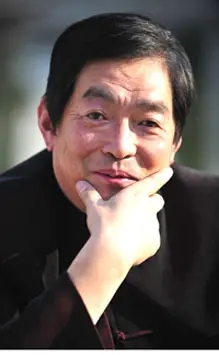
Wu Kejing was born in 1954 in Fufeng County, Baoji, Shaanxi Province, not far from the ancient Famen Buddhist Temple. Originally a carpenter by training, he graduated from the Department of Chinese Literature at Northwest University, and has been described by Jia Pingwa as a “late bloomer.” A prolific essayist, story-writer and calligrapher of note, he has served as Vice Chairman of the Shaanxi Writers Association and Chairman of the Xi’an Writers Association. His novellas include The Five Maidens of the River Wei, Five Flavours Crossroads and The Handcuffs with Blue Flowers (winner of the Lu Xun Prize). Wu Kejing’s novel The First Marriage was adapted for television to great acclaim in 2018.
About the Translators:
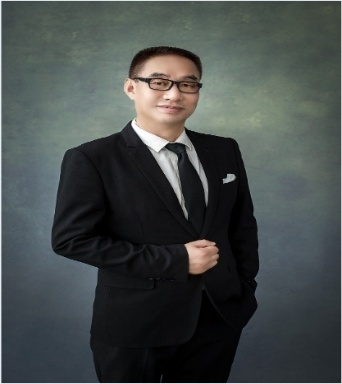
Xie Junping, associate professor, born in San Yuan County Shaanxi in 1964. He served as the dean (2014-2024 ) of The School of Foreign Languages, Xijing University. Research Directions: English and American Language and Literature, Educational Culturology, English Teaching Methodology.
Hu Zongfeng, Robin Gilbank (Refer to the previous introduction)