 微信公众号
微信公众号

《当代西安作家十五人》英文版 连载5 | 弋舟《出警》The Callout
所属分类:译家名品 阅读次数:333 发布时间:2026年03月02日 16:53:10
The Callout
By Yi Zhou
Translated by Hu Zongfeng & Robin Gilbank
To date I’ve spent fully nine years sleeping in bunks – four of them in university and five in the police force. If nothing changes, perhaps I’ll have another nine years like this. As I sprawl out on the upper bunk and gaze out of the window, the night is dense with mist, and the emergency lamp at the entrance to the station twinkles in silence. The coin operated horse ride in front of the supermarket opposite has a revolving light of its own. Children’s songs blare out from it even though there is no rider. We are swept up in a kind of illusion as if we are employed as the night-watchmen at a fun-fare. Behind this ghosts the indistinct silhouette of a ferris wheel and the spectre of the seven dwarves appear then vanish.
To dash out from the dorm on such a summer night would be like leaping into a huge boiling wok. It requires the same kind of courage as a winter swimmer has. The telephone in the duty room downstairs rings incessantly and it comes as a relief that there are no serious emergencies awaiting us officers. Still, who can be sure? It is sweltering outdoors and the evenings are even worse. The heat which has been accumulating on the ground all day begins to rise and percolate. The later the hour, the more stifling the heat, as if the night were launching a counterattack against the daytime. Fortunately, the station is now fitted with air conditioning. Last year our dormitory had to rely on a freestanding electric fan.
The newspaper reports that the temperature has reached a sixty year high. I am not yet thirty and have never experienced such extremes. Little Lü brushes this off as nothing. One hundred degrees is not unusual in his hometown and we are having to contend with sixty degrees at most. He comes from Xinjiang, where his family home is situated at the foot of Flaming Mountain. Could it really be so hot there? His bravado gives off the feeling of being frogs, frogs flung into the same massive wok together: we share a common bitterness but sorrows of our own. Some will be boiled thoroughly all the way through, while others can skirt around in comfort swimming the breaststroke.
I prefer to be on duty for a whole day’s shift at a time since that entitles me to the next day off. A week from now I’m scheduled to attend a closed training session. The municipal bureau has organised a basketball tournament with me as part of the line-up. This being the case, I don’t have time to visit home. LittleLü is of the same mind as me. Should he be on duty all day, then that means one more whole day he can spend with his girlfriend. This young chap is ardently in love and, since the woman has only recently graduated and is yet to find a job, she has time aplenty to share and to kill. As for me, I need to go home and keep my mother company.
Every four days the two of us find ourselves on duty together. I am the chief and he is my assistant alongside several auxiliary officers. He was assigned to our station direct from Police Training Academy and we two formed a working partnership with me as his senior. Whenever we are on duty, he prepares his civvy clothes in preparation for the ensuing day off. This seems to sound the whistle for his impending date. Clad in jeans and other togs he looks high-spirited, ready to go courting as a new man. He is fairly good looking and almost the same height as me. Had he not been a touch on the wiry side he might have made it onto the basketball team. On account of our height, we have more than once been seconded by the court to accompany suspects to trial. These are all headline cases with TV coverage, so by having the accused sandwiched between two giants an obvious impression is conveyed.
When we are on duty, Little Lü is contented and vigorous, as if he might break into snatches of song at any moment. Actually, I share this same feeling. Early in the morning, I typically have to ask my wife to prepare my mother’s favourite food. Our state of mind doesn’t influence our work, for both of us have something we hope for that can be readily grasped. Most people have a quiver full of hopes, but few of them are close to hand.
That day we received more than twenty calls which require answering in person – far less than at the peak time. According to the rulebook, should there be no emergencies we are permitted to turn in at 11pm and rise at 5am to resume our duties. By the time the clock strikes, we have already started to recline on our bunks. I chat with LittleLü about Old Kui, who has recently made the subject of a newspaper article penned by a reporter. Having listened right through my account Little Lü sinks deep into contemplation. I guess he has been greatly inspired. Later he dives into that boiling wok outside. When he comes back it is the dim light of morning and he seems to have forgotten about the need to change his clothing.
In our profession, as in others, we uphold master-apprentice relationships. My master was Old Guo, who taught me the essentials of policing. It is a pity that he was diagnosed with throat cancer three years ago and was forced to retire. When I paid a visit on him not long since, it was evident that the old man could not soldier on for much longer. He was exhaling more than he inhaled, though he had been in decent shape when I first entered this station. His face was now dark and its wrinkles appeared to have been cleaved with a knife. Whenever he patted his chest, it gave off the sound of clanging metal. I found that he bore a close resemblance to Chen Zhongshi, the author of White Deer Plain. Both shared the characteristics features of an old timer from the Guanzhong Plain.
Old Guo developed an addiction to tobacco. Latterly, when smoking in public buildings was banned all over the world, our station followed suit. He was compelled to go out into the yard and find a corner where he could squat and take a few puffs when spells of leisure arose. Sometimes he was so busy that he forgot about the ban and would unconsciously clamp a fag between his lips. On encountering the station head he would receive a browbeating and incur a fine. This rule seems neither humane nor considerate to me. His cancer might have been the result of nicotine, yet had Old Guo not found himself so inhibited he could well still be patrolling the streets with me. Cigarettes had been like his ration of grain, but back in the station he was forced to behave as surreptitiously and guiltily as a thief. One day in that state may have dragged on like a whole year to him. This was a grave injustice. He had worked here all his life and had spent more time on the bunk than on his own mattress at home.
Our police station is located on the rural-urban fringe. One might come across vegetable plots hidden behind skyscrapers, and in the cafes there are always guys stripped to the waist and playing mahjong. To begin with, had Old Guo not taken me on a reconnaissance of the area, I could easily have become lost. It’s a labyrinth, and no mistake. The alleys formed in between adjacent buildings are so narrow that only one pedestrian can pass through them at a time. Should someone in a foul mood encounter another head-on, there is certain to be a confrontation. Fist fights are also possible in spite of the confines of space. God decreed that the path to paradise is a narrow one, so each time I squeeze through one of these alleys, I imagine a bounteous land awaiting me straight ahead.
One time a girl entered a passage of this sort. She wasn’t set upon by scoundrels, but a couple of stray dogs. With one at the front and one at the rear, as if by plan, they had her surrounded. In her fear and panic she called the police. When we arrived her skirt was soaking in piss. I had to wield the telescopic snare and capture the culprits. Rounding up strays is another part of our duty.
My master was familiar with all the residents. Anyone who ran into him would offer him a cigarette, so it seemed as though he was known universally. Many a nonsmoker would fumble out a wrinkled woodbine as if they had been counting on meeting him for several days. He carried with him an aluminium cigarette case inscribed with the image of an ornamental column found in front of Tiananmen Square. He seemed to have been using this box for an eternity. Once he received a cigarette, it would be stowed away inside, so that the box would be virtually full after he returned from patrol. He was also in the habit of giving cigarettes to others, though never parted with the ones stashed away in the case. Those he handed out, must have been purchased by himself. He had his principles and his own fastidious way of handling worldly affairs. Old Guo felt this to be a form of virtue which in some way encapsulated the responsibilities of a police officer.
From observing how he exchanged cigarettes, I believe that I comprehended what it meant to serve in the force. To be frank, this was so far removed from what I had imagined before joining up. Old Guo, my uniformed master, retained a grandfatherly presence. This is harder to appreciate nowadays since so many uniforms appear similar to ours. When an auxiliary officer from the station stands alongside a security guard from the supermarket and one of our own, it takes insider knowledge to tell which of them is the regular copper. We carry truncheons or batons on patrol, but security guards have implements of their own on their waists.
In each of the areas under our jurisdiction there are several tough nuts we refer to as “hardened cons”. That’s our technical term. These sorts require being watched strictly, with Old Kui being one of them - a prime example. He was already over seventy when I joined the station. In my eyes, he didn’t warrant that title, since I found all he was capable of doing was feigning injury. He would lie on the ground and refuse to get up as if a victim of police brutality, then try to extort hush money from the officers concerned. My master viewed things differently. “Yes, the old fella ambles along,” he remarked. “But mind you he has objects about his waist.” In our local dialect “objects” denotes something suspect, in other words devices or contraband. Old Kui’s midrib was purportedly flush with concealed weapons and a casual glint of one would incite panic.
I noticed something of a likeness between Old Kui and Old Guo. The first time Old Guo took me over to “introduce” him, I sensed they might be kinsmen. The pair of them sat opposite one another in the common room with those four sallow walls gradually becoming more besmirched with smoke. They didn’t talk. Instead the old men buried their heads and dragged away hard at the tobacco. The fags were rolled by Old Kui himself. He would prod a gobbet of flake onto a sliver of newspaper two fingers wide, then rub it into an ingot before dabbing his tongue down as an adhesive and passing the finish article to Old Guo. Old Guo would then light up and offer one of his own in return. Old Kui must have been more than twenty years older than his counterpart. If you could overlook the fact that his limbs were not so supple and he had a severely hunched back, the pair of them looked alike. We were not sure whether Old Guo is older than he claims or if Old Kui was younger than stated. Maybe those men of the Guanzhong Plain are like terracotta warriors cast from the same mold? He allowed Old Guo to occupy the sofa, while he himself pulled over a stool which made him appear a tad shorter that his actual stature. As Old Guo introduced me to him, he shot me that kind of glance that grandsons receive from their grandpas. In truth, he has no grandchildren to call his own. He is just a solitary old man.
As per our system, it ought to be sufficient to pay a monthly visit to the “hardened cons.” However, Old Guo essentially took me to Old Kui’s home on a weekly basis. Sometimes when we were out on patrol and came into that vicinity, we would drop in there for a quick break. I guess those rollies sealed with Old Kui’s spittle were to my master’s taste.
The first time they discussed Old Kui’s criminal record I could no longer be counted as a green hand. I had already grown accustomed to herding up dogs on the street and such like, so didn’t have to fantasise about there being some paradise at the end of the narrow alleys. Old Kui would duck his head as he smoked, then burst out with an admission like “Had I known that the rest of my life would be like this, I’d have gone all the way and topped that guy when I had the chance.” Like the smoke which spewed from his mouth, those words were choking. I knew his rap sheet all too well: attempted homicide, GBH. He had spent eighteen years inside. I didn’t know that after so much time he could still spurt out such fierce words.
Upon saying that, Old Kui tossed away the cigarette in his fingers. He then stretched out his loafer-clad foot and stamped it out. There was an ashtray to hand, so he was obviously doing this to show off his harsh and vindictive temperament. I waited silently for Old Guo’s response. I guessed that he would scold him. At least his facial expression ought to have been suitably grave, and conducive to some solemn criticism along the lines of: “This isn’t the right way to go about things. If you’d wanted to die young, you shouldn’t have made others your accomplices.”
Old Kui’s head would have drooped down in response with a phrase of remorse like: “Right, you’re dead right.”
I have already chastised so many fellows and to be frank none of them dare answer back. In my mind, if Old Kui were to not to hang his head and pay heed, I would make him pick up that butt and swallow in down whole. Old Guo would then add: “If you have any problems, raise them with the government. Do you have any difficulties?” At that, Old Kui would begin to vent his grievances: “The meat is too expensive, counterfeit goods are everywhere, even human hearts are not what they were in the old days, girls show too much flesh,” and so forth. Old men always complain to me in this way. Dredging up grassroots opinion is also part of our duty. A conversation in this format is what I expected in my heart. I am somebody who thinks about matters deeply.
Old Guo didn’t seize the opportunity to browbeat him. He simply handed him a cigarette and began to talk about medical insurance, the climate and how the residents of the building nearby were due to be relocated. Old Guo was not normally a talkative man, so this proved a little awkward for him. He spoke absentmindedly and Old Kui listened with an absentminded ear. The topic was not important. What mattered was the interaction between speaker and listener.
When it came to relocation, Old Kui had form there as well. He had renovated his own home early on, the first of its kind to be redeveloped in the neighbourhood. He owned just two small bungalows and chose to replace them with two single-room apartments. He threatened that he would take another life if he couldn’t have his own way. Everyday he sat by his front entrance, bare-chested and with a pig-killing knife on the ground as if he were about to slice open somebody’s belly at any moment. The entire story was recounted to me by Old Guo.
On that particular occasion, Old Guo chatted with him about all manner of trivial matters for half a day. Just as we were about to leave, he tossed him half a packet of cigarettes. I turned around and fixed Old Kui. Irrespective of what angle you looked at him, the old hanging-headed wretch on the stool was a waster and posed no hindrance to the world. His spine was kinked out of shape as if pounded that way with a sledgehammer. Why then did he retain all that bluster?
From then on, Old Guo took me to his home with increasing frequency. Every three or five days we would drop in on Old Kui. To my mind, the whole business was topsy turvy. Old Kui would spit out sour words and Old Guo would not respond as though he was cowed by him. Before he retired, my master urged me again and again to visit Old Kui as often as I could when I had the time. Later on, I did drop by alone. When I shared the news of Old Guo’s cancer diagnosis, his eyes wore an expression like they had been struck by a rod. This reaction suggested to me that my master had tamed him long ago.
As a nonsmoker, I couldn’t sit close by. Whenever he and my master got together they might not have anything to say, but there was that feeling of them silently sharing their thoughts. I had no tacit agreement with him, nor did he spit out cruel words in my presence. Naturally, I didn’t follow Old Guo’s advice to the letter, visiting once a month at most as part of my regular rounds.
As a matter of fact, I have been busy as well. If I shared what our routine duties at the station entails, that might be held up to ridicule. Most of the time we just run errands and are on hand for anybody to make use of us. Without Old Guo, workaday issues seemed to exert a toll. Minor incidents, disputes and other trivial matters he was able to treat casually. Exchanging cigarettes to him served like using a pulley – a small force was used to considerable effect. When my time came around, though, I found myself run ragged by being constantly on the go. Now that I am LittleLü’s master, should I teach him by precept and example?
LittleLü was a fellow who liked to think things over for himself. Somewhat like me, he had a strong sense of responsibility from the moment he entered the force. In his mind, a policeman should be a sharp detective, have a knack for cracking big cases, the skill to apprehend sly cons, a thirst to eliminate evil and to let the people live in peace. They shouldn’t busy themselves with trivia like shooing away dogs and chickens. I am inclined to believe that when a man is in love he reckons himself a hero, and LittleLü is just that way. Were it not so, then that suitor wouldn’t appear a match for his beloved. I had the same feeling back in the day.
At present, I tell my wife less and less about the mundane business of each day. I harbour no heroic dreams of my own, but hope that she will persist in hers. In this way, I can arrive home and still reasonably claim to be exhausted. Sometimes when we run into disputes in the neighbourhood, I can’t bear to ask LittleLü to go out and handle them. I am afraid that this will depress his heroic swagger. His background is different from mine. I was recruited via the civil service examinations, having worked in another state department. He graduated directly from the police academy at the foot of Flaming Mountain. I hope he can grow into that dynamic man of action I once imagined a police officer could become.
If you were to watch me sorting systematically through all the problems we must tackle on one shift, you would appreciate the gulf between dreams and reality.
We reported for duty at half past eight. The household registration office rang us to say we must remind foreigners in our district to apply for a personal certificate. I let LittleLü take care of this because his English is quite good. As some of the telephone lines are not in service we must find time to notify these people in person.
After working through the call list, we hit the road. Glancing at the fuel gauge, the tank was almost empty. Hence, we first of all drove to the filling station to be sure that the tank didn’t run dry during the shift. I’ve had that mishap in the past.
A little after ten, we received a call that somebody was brawling in the allotment by the cemetery. When we arrived there we learned that two of the workers had a spat yesterday morning over some measly matter. The party who felt most aggrieved slept on it and then called us. It was like raking over the stubble after the harvest had already been gathered. They were back on good form, brimming with energy, and unyielding to one another. The pair had to be hauled back to the station, where we argued with them and reasoned for a long time. They refused any reconciliation. Then my mind turned to Old Guo. He could well have been able to solve the dispute with just a couple of cigarettes, whereas my mouth was parched by now and my tongue scorched.
As I sighed with fatigue, someone rang to tell us that a nuisance caller had been bombarding her with seditious slogans. I let Little Lü deal with this. A short while later, he brought in the complainant. She was drenched in perspiration, but at a single glance was obviously of the eagle-eyed old auntie kind. We probed into the case and put the details on file. It was vital that our superiors knew all the particulars.
The dining hour had passed and there was not a single soul manning the food window in the canteen. To our relief, the assistant cook was still around and we didn’t have to make do with the oily noodles at the dive opposite the station. The food there was cheap and tasted it.
No sooner had we lifted our rice bowls, when there was a call to tell us about yet another fist fight. I left Little Lü to finish eating, while I led a number of auxiliary officers out in a hurry. The scene was far away and called for an urgent response. The caller sounded very agitated and fearful that a murder was about to happen. When we boarded the car, I slammed down on the accelerator and didn’t let go. The officer besides me directed me to the location from where the call came. As it happened, the case fell under the jurisdiction of another station. We reported this error to the control centre and headed back to our abandoned meal.
The second we planted down our bowls, the station head informed us that there had been a spate of larceny on our patch. It would make sense to convene a meeting with the property management associations in the neighbourhood. We needed to discuss preventative measures and draw up a “Police Notice” to warn residents to show vigilance. I dealt with this myself. To be honest, I would be embarrassed to delegate this hack work to Little Lü.
Just as I began to draft the opening sentence, a report came in about an altercation in front of a company office. Little Lü and I hurried over. Beneath the searing sun, all was peaceful and there were no signs of any dispute. The street contained not a single shadow, least of all that of a man. The bright noonday sun hit the roadway at a sheer angle making it gleam like a silver belt.
When we asked the doorkeepers at the company, they told us that the suspects had gone.
“Only a young couple duking it out.” The doorman’s tone was rather smug as if he took delight in other’s misfortune.
Back at the station, another member of the public was waiting. The young woman complained that her “beloved” electric scooter had been pinched. She couldn’t recall what model it was; only that it was so very special. Her boyfriend bought her it as a birthday gift and it was “the prettiest little bike in all the world.” Little Lü exercised tolerance in taking down her statement, as I returned to composing the “Police Notice.”
No sooner had I completed the piece when someone complained of a theft at a restaurant. A separate call concerned a quarrel at a cement plant. We split up so that LittleLü handled with the former, this being certainly a criminal case. I found that the other problem was in fact a labour dispute. A part-time employee claimed that he was being underpaid by the boss. The two parties rejected my offer of mediation, so I had to refer them to the Labour Arbitration Department.
On our way back, someone phoned from within the community, informing us that there was going to be a demonstration in the evening. Given the large attendance expected, our presence was required to maintain order.
The affair unfolded in this way.
Around dusk a kind of hush descended. Little Lȕ was out patrolling his patch. A member of the public had phoned in alleging that his neighbour was manufacturing drugs at home. I handed the case over to my subordinate without even thinking. At first he was excited as if he had been lying in wait with an open net only to discover that at long last it had caught a hefty fish. I was familiar with the building in question. It was constructed by the Ministry of Education and all the residents taught in middle schools. The informant was a retired headmaster, who attested gravely that with his extensive knowledge of chemistry, he could identify that something was awry about the odour that had been percolating the atmosphere of his balcony. The couple next door were teachers too, with a child of ten or just over. Sure enough the lady of the house taught chemistry.
Nevertheless, following various forms of investigation no evidence was found. Little Lü was unwilling to call it a day, and what was more the old headmaster had called us more than fifty times in the last six months. The case now weighed upon his mind. He thought our work should not come down to trivia like writing police notices and trying to recover “the prettiest bike in the world”. His words were rather pithy since a few days earlier the neighbouring station had investigated how a number of knife-wielding females had slain a bar boss with hundreds of blows.
On his return, Little Lȕ wore an unshifting frown. He recounted how he had crawled across the headmaster’s balcony and sniffed away for ages. All that drifted through the air was the aroma of pork being slow braised. It preyed on my mind that the temperature out on the balcony might be creeping to fifty degrees centigrade. For whatever reason I have always assumed that the heat at night is more stifling than during the day. The heat of the daylight hours is conspicuous and needs no justification. That of the night is irrational and evades reason. Since it is irrational it is tougher to endure.
The mass activity that night was in fact a square dance performance. Fewer spectators turned up than was expected and the organisers overestimated their appeal. We went over to make a reconnaissance, then arranged for several security guards to monitor the scene as Little Lü and I went out on patrol. LittleLü was considerate. With the kindness of someone who had withstood the overpowering heat of Flaming Mountain, he invited me to stick to the supermarkets while he minded the streets. What a sweltering day! We were not allowed to removed our hats or loosen our belts. I felt scalded to step out from the supermarket onto the street and flash frozen when it was the other way around. Each time I hopped in or out, my heart either shrank or swelled. I graduated from an agricultural university and the motto of the place was “Free the people from desultory toil.” The task at hand, with its alternating ice and fire, certainly allowed me to experience “desultory toil” of “the people.”
We could say that this day ended well, and a decent sleep lay ahead. If all pans out this smoothly, we could hand over our shift at 8:30 the next morning. Little Lü should have been able to change clothes and arrange to meet his girlfriend. I ought to be free to visit my mother with frozen dumplings. Father passed away before his time and in the run up to New Year she took a tumble as she was using the loo at night. The head of her femur was fractured, and after the operation she was left bedridden. I had to find a home-help for her.
As I have finished telling the story of Old Kui, LittleLü dashes out on call in the middle of the night. When he is out like this, I cannot settle. At the beginning he might not have been listening to me attentively. I suppose that he was down there on the bottom bunk, fantasising about his impending date. Even so, I told his this story deliberately and just kept on ploughing through the narrative. As expected, his interest was captured, and he seemed to sense my underlying motive. What I hadn’t expected was that he would be so inspired by it that he would charge out of the station spontaneously.
After Old Guo retired, I followed his orders, but tried to visit Old Kui once a month at most. Later on I called and found there was nobody at home. At first I thought little of this, though went downstairs to ask one of the old ladies about him. She told me that she hadn’t seen him in days. “No one knows where he’s gone to die,” she commented. On hearing these words I came over a touch perturbed. It had been known that elderly widowers died at home and their bodies lay in there unnoticed. I went back and reported this to our chief. I then called over a locksmith to let us into his home. The room was empty inside; nothing but those four bare walls. Nobody either living or dead was around and we could see that it had been uninhabited for quite some time.
Old Kui had disappeared. This did not appear to be a serious issue. He was at liberty to disappear should he wish. No one stipulated that he must live out his days crouching at home and smoke. I supposed he could have gone out on a tour. His finances must not have been in too unhealthy a state since he was able to rent out one of his apartments. The price of property in this area was by now pretty bullish. I asked the locksmith to change the lock and left a message with his neighbour before sealing the residence.
When I dropped in on my master Old Guo, I filled him in on this topic. He appeared rather irritated with me.
“Going on a tour, my arse,” he shouted. “Old Kui will go on a tour the day I pop into a whorehouse.”
Still, I didn’t quite catch his drift. I hoped not to have made him angry because he had a round of treatment scheduled and the state of play wasn’t clear.
“You go and apply for a cooperative investigation. Check if there are any unclaimed corpses around.”
Now I understood him. He was concerned that Old Kui could have met his end outside.
“Go and speak with the receptionists at the station,” he added by way of advice. “Folks get muddled when they grow old. Maybe they can’t remember their way home.”
On reaching the station, I implemented his two suggestions in turn. There was no sign of any person matching his description. Just as I was fretting about how to share the news with Old Guo, Old Kui reappeared a fortnight later of his own accord. The manner of his return took us all aback. One night he called the police to report that he had suffered a fall at home and could not get up on his own. As I sped over there, something bothered me: the key to the new lock was here in my hand, so how could he get back into his home?
His door was ajar. I pushed it open, expecting him to be sprawled out immobile. When my mother had her accident last year she lay on the floor the whole night. She had been living on her own for years and her cellphone was not to hand. It was only the next morning when our neighbour heard someone crying inside the apartment that the situation became apparent. My mother wailed like a wronged child when she caught sight of me. She was weeping so hard that she must have been genuinely heartbroken. That I’d never seen before. Old Kui, on the other hand, was squatting on a small stool with his rickety back. The light bulb in the lounge was of such a low wattage that a halo shone above his head while the corners of the room were dark and murky. He seemed like a leading man in soliloquy on a dimmed stage, with only the spotlight to expose him to the audience.
Old Kui didn’t tie the knot until he was thirty. In those days this area was still an expanse of fertile land, yet he never laboured for one minute on the land. Had he lived in a different era, he would no doubt have fallen in with the bandits who terrorised Mount Liangshan. Before he served time, he was seen as a ne’er do well in the village. At thirty-five he was sentenced and thereby fulfilled the predictions. Upon his release eighteen years later both his wife and child had vanished. More than two decades on, the farmland had morphed into high rises and girls’ skirts have crept up ever shorter. The some-time village tyrant now sat wizened and forlorn beneath a thirty watt bulb, hanging onto the last breath of his life.
He hadn’t fallen, so there was no need for him to struggle to get up. In short, Old Kui had filed a bogus report. I don’t know what his motivation was. When I came into his presence, he neither uttered a word nor tried to justify his behaviour. I criticised him with a sullen expression and he merely sat there, rolling up a cigarette after an interval. When it was finished, he unconsciously handed the fag to me. I guess that he had mistaken me for Old Guo. His hand paused midair wielding the cigarette, but sensing his error he retracted his arm and slipped it into his own mouth. He lit up with trembling hands, something which elicited concern. Thinking back to Old Guo, I affected politeness. On being asked where he has been these days, he made no response and merely took more drags with his head drooping down. Occasionally, he coughed up a blob of saliva and swiped his foot over it.
I had to find a topic to talk about, so enquired how it was that he got into his home.
“Is opening a lock so troublesome?” he replied with disdain.
I walked over to inspect and found that the lock had been changed again. I owed him money since it was me who changed the former one. He didn’t state for certain whether he would accept some cash or not. My patience being tested, I crammed a twenty yuan note into his hand. The moment my flesh made contact with his, he grasped hold of the banknote together with my hand like an animal reflex. Within a second I had that sensation of being gripped captive.
The matter has not yet been resolved. A few days later Old Kui called us again, once more claiming that he had fallen and could not get up. Even if we suspected this to be a tall tale, we must nevertheless go over and investigate. As predicted, he was sitting on the same small stool, his eyebrows drooping like an elderly ape at the centre of a darkened stage. The difference is that this time he was waiting for me with freshly-brewed tea. The drink was steeped in a worn enamel mug and it occurs to me that the brick of tea should have perhaps been cooked first. I thought I could hear the water bubbling as it was being brewed. Since he had invited me over for a tea break I demanded to know why he was yanking my chain like this. He did not explain his motives but started to chat with me about what he had been up to while he was away. I had never heard him talk so much. Actually I’d seldom actually listened to him at all. That night, for whatever reason he was insuppressible.
Old Kui explained that he went out in search of his daughter.
He first went to Yunyang County in Chongqing. Scouring his memory, he could recall this selfsame stretch of surging river rapids. But hadn’t this been chains of lush mountains leading all the way into the distance before? At that moment, he felt beset by his advancing years and mental confusion. It transpired that the place he had been looking for was submerged as part of the Three Gorges Dam Project. The villages in question had been relocated a dozen years before. The world had seemingly been turned on its head and time had wrought colossal changes everywhere. Old Kui was unwilling to quit his quest, for he had ventured so far to reach this locale. He had not been anticipating that the Earth would have been cast afresh. He sat stubbornly on the riverbank for three days as if waiting for some miracle to transpire, whereby the waters would recede and the rocks be exposed again.
Three days hence, he moved his mission to Qingpu Township in Shanghai, for he had learned that this was where the local residents had been transplanted. The spectre of the Shanghai Bund was no less astounding to him than the flooded reservoir. To him, everything there belonged to a parallel dimension that was lustrous, weird and bedazzling. He was a crack hand at picking locks and prying doors, yet his wiles were unequal to the task of finding just one person amid this metropolis.
Old Kui did wned his way to Qingpu Township, only to find that eighty or ninety per cent of those displaced persons did not choose to settle there. They had already dispersed in all quadrants. Still, he was unwilling to give up now.
In the west of Qinpgu lies the largest freshwater lake in Shanghai. Those one hundred thousand mu of mist-covered deeps appeared to know no limits. Repeating himself, he sat on this lakeshore for three whole days as if waiting for the waters to evaporate and the rocks to crack open. He hadn’t located his lost daughter and feared that floods from the heavens had spirited her away together with any word of her whereabouts in this sublunar realm.
I had no actual interest in Old Kui’s family matters, nor could I think why he had chosen to share this with me. But what I did perceive is that the subject was not as important as the act of talking itself. His mouth resembled a worn out and rusted contraption that started to operate again laboriously with a squeaking and whirring sound. The effort entailed lifted his mood and brough a happy sense of surprise. He slouched down lower in front of me, gulping down his saliva as he spoke. This helped to lubricate his long dust drenched throat. His eyes took on a muddy and bewildered veneer. Yes, he was now rather animated. I surmised that this old timer hadn’t maintained an extended conversation with anybody for years. It was as those he was intoxicated by his own vocabulary. He even let loose an acrid belch like a drunkard. In response, I patiently sipped my way through a couple of mugfuls of tea, trying to withstand this dull yarn. I was guessing that there would be a postscript to this. He may well have been about to ask us to trace his daughter. In this case, we’d have yet another burden to deal with. I was already hatching in my mind a plan to contact the police in Shanghai when we got back to the station. As it happens, he didn’t raise this topic.
Something else exceptional occurred. Old Kui saw me off. His loafers were half hanging off as he tottered over and reached for the door. Once, then twice he tried to extend his hand to grasp the knob for me. The third time he managed it and I could realise that he was too old to be regarded as simply old. Clearly, his body no longer listened to his brain’s commands.
A few days later, again in the middle of the night, Old Kui called for help. Now it seemed that he had deliberately chosen the time when he knew I was on duty. I sent an auxiliary officer out in my stead and the young man returned and told me that Old Kui demanded I come in person. This made me somewhat aggrieved and angry. Knowing that this would prove nothing serious, I decided simply to ignore it. But to our surprise, Old Kui appeared at the station early the next morning.
As I was about to sit down in the duty room and rearrange the records from the previous day, I lifted my head and caught sight of him. He was markedly shorter than me and stood the other side of the glazed partition. He didn’t say a thing, and I felt too lax to become involved with him now. I carried on with my task.
A little while later there was a rap against the pane. I raised my head to see his mouth quivering as a gorilla’s might when it is gawking and grinning at visitors to the zoo. I buried my head and continued what I was doing. He banged again and now his voice was audible. Thinking that I had misheard him, I stared at him askance. His mouth gaped and closed, but with a layer of glass between us it was like the words emanated from his diaphragm, not his larynx. An invisible puppeteer was kneading Old Kui’s stomach and intestines, generating a mysterious language over which he had not control. He mumbled the same phrases once more. This time I caught the meaning. “I’m handing myself in,” he declared.
Whether this was true or a trick, I knew that either way trouble lay ahead.
I gestured for him to enter the office. Through the window I could see the scarcely-concealed happiness about his face as he steadied himself with one hand against the wall.
To come straight to the point, Old Kui sold his own daughter as soon as he was released from prison twenty-four years ago.
One year before he got out, his wife bolted with another man. This issue had been bothering me. Old Kui himself was over fifty years of age back then, so his wife couldn’t have been so young. Who might have wanted to elope with her? If she had in fact fled, it seemed more plausible that she went off on her own. All the same, Old Kui was adamant that she had “run off with someone else.” Had events not taken that turn, there would be no reason for him to vent such anger. In any case, there was no reason to assume his rage could be soothed. Languishing behind bars for eighteen years, all that pent up hatred must have distilled in his mind. That would explain why he was regarded as a “hardened con” in the criminal community. These people harbour hatred towards everything and require a strict eye being kept on them. When Old Kui was released back into society, he gazed around and saw how eighteen years had elapsed. The world had become as alien to him as Mars and he had been transformed into a tiger who wanted to maraud and gobble down the very sky, yet didn’t know where to take the first bite. He was bloated with contempt and thirsting to rebel. His focus then shifted onto his daughter.
Old Kui’s girl was by then twenty-three years of age. Can you imagine how she turned out being raised in a family of that ilk? It was not that she conducted herself in what would be called an unscrupulous way. She was pleasant enough for starters, only too naïve, too antisocial and eccentric. While her pa was inside, her ma ran away. Who could blame the woman? The daughter dropped out of education after having finished primary school and set up a roadside stall to sell vegetables. In winter, she supplemented this trade by roasting sweet potatoes in a barrel oven.
Upon Old Kui’s release, he wrested ownership of his property and was able to renovate it into two apartments by standing his ground. The pair of them ought to have been able to eke out a decent life. But he stubbornly refused to tolerate such an arrangement. Is the nature of man really so unfathomable? I guess if life were more straightforward, there would be no need for a police force to exist.
I have heard it said that the nouveau riche in the south of China have even taken to eating the flesh of babies. Despite mostly having to tackle trivial and ordinary problems each day, I have come to realise that the path I tread is a narrow one. When you look at the world with a sense of hindsight, you cannot help but recognise that it is fickle and that vicious, violent waves lie barely hidden. For example, a husband may stalk his wife and vice versa. These absurdities cause us to ponder what has gone wrong with society. The core beliefs which give us an explanation for the meaning of life are being shaken.
While he served his sentence, Old Kui had a cellmate. That lag joked that on being released, he would buy Kui’s daughter to be his bride. Dwelling on this offer was the fuse which allowed the wicked fire to burst out from his being. Later on, as a freed man Old Kui made contact with him and set out on a trip to find him with his daughter as a travelling companion. After two days and nights onboard the train, they at last reached their destination. The place was lush with mountains and crystalline waters, making it highly desirable for human habitation. It was there, however, that Old Kui’s last shred of conscience abandoned him and he accepted the 20,000 yuan the fellow was willing to pay for his daughter. She was duly left behind.
Old Kui said that he hadn’t even planned to spend that one night in his accomplice’s house. I think I could understand the logic. His wicked fire had found its way out and were it to burn unstaunched it might consume his entire being as well. Was 20,000 yuan a huge amount of money, really? That was perhaps not the sticking point. If money were not his motivation, he could just as easily have traded her for 200 yuan. Revenge was what he craved. Who should be made to pay? He hadn’t reasoned that part out with clarity. He had encountered the darker side of human nature like a precipitous crag and staring at it struck him dizzy. He wanted to lash out at his wife and the suitor who had taken her, to wage on assault on the manners and morals of the time, and to stick two fingers up at human conscience. Perhaps he himself would become a target of his own hatred.
He told me that he had never even touched the wad of cash. Well, not until today. Back then, when he did that cruel deed, his soles appeared to be riding the breeze, rendering him so buoyant and light that he could mount the clouds and ride the mists as an immortal. Later, though, he slump into a ditch and slept in the wilderness for one night without another soul around him. When he awoke, the mountain gales were overpowering and unstinting, and he believed that he had actually perished.
The year Old Kui’s daughter disappeared, everybody took it for granted that the girl had gone out in search of her mother. Who could have conceived that there would be such a dark and guilty secret behind the affair?
There could be no question that a bona fide crime had been committed.
Nonetheless, this left us with a thorny riddle. The statute of limitations on abduction and human trafficking is twenty years. Anxious and worried, I consulted in detail the criminal codes surrounding this offence. It was apparent that time had robbed us of any chance to prosecute. Should we wish to place Old Kui under arrest, then we must seek a dispensation from the Supreme Court. This case would surely not qualify for consideration. Once the statement had been recorded in full, I climbed the stairs to share the news with my superior. As I was heading out of the door, Old Kui asked why he had not been cuffed. My expression, combined with a jab of the finger, told him that he must wait where he was. I was at a loss as to what to do with him next. For certain, the guy was a bastard, and the oldest specimen of that type I’d met. It is perhaps true that with advancing years, the strength of his bastard nature is diluted.
On completing my report, the commanding officer followed me into the duty room. His head tilted to one side as he studied Old Kui at length. As he was the head of the station, as soon as he opens his mouth, his questions started to fumble through the doubts which remain raveled in my heart.
“Hi, Old Kui.” He cupped his chin and then asked: “Why did you wait until today before handing yourself in?”
Old Kui’s mouth twitched. He had been garrulous just before and was perhaps fatigued from having talking too much. His jaw creaked like an engine being revved in vain. Others began to worry about this.
Had it been that he just wanted to wait long enough to escape being punished? If that were so, then there would have been no need at all to admit his guilt. Had his conscience at last found him out? It appeared not. His face bore not the slightest pang of regret or pain. On the contrary, there was a kind of excitement. It was just like that night when he talked endlessly to me. That time his face shone with a sort of pleasure which said that he had now “had his fill of talking.” I was spoiling to kick him.
Our head had the final say in the matter. Old Kui should be free to go home for now. He refused to leave. He asked us to try and find any pretence for locking him up. It was not easy to do that, since no record of arrest could be filled out. That was obligatory for sending him on to the cells. Keeping him in this station was not an option. It would be like inviting an ancestor over, who needed people to wait for him. What could be done? This emergency brought me to my senses and I thought of Old Guo.
It had been some time since I last saw Old Guo and he really had become as thin as a scrap of paper. As he approached the station in a floating motion, it was hard not to be struck with pity. Old Kui appeared to wilt too at the sight of him. A moment ago his bearing had been proud and he was in high spirits – like the last radiance of the setting sun: he had reverted to being that tricky bastard. The second Old Guo handed him a cigarette, he followed him away with a hunched back like a has-been dog. The two disappeared together along the gated corridor of the station, vanishing into the incandescent light, as if about ascend to heaven and become immortal. That empty space within this cosmos now became theirs.
Thinking the issue over, I was sure we could at least put this on ice for the time being. About a fortnight later, however, an article ran in the local newspaper. The headline read “Old Con Turns Himself in at Long Last: Confesses to Selling Daughter.” The report was accompanied by a photo of Old Kui in conversation, beaming and elated. Our station was duly inundated with complaints from members of the public who didn’t know all the facts in the case. “Why not arrest this evil bastard?” was their usual strain. This antagonised our station head and since I was the one who brought to light this business, I had to fend off all these livid questions. I too was less than pleased because on top of my tedious day to day responsibilities it now fell upon me to painstakingly outline the letter of the law to laymen. My colleagues thought this a lark and laughed and whooped whenever they received a fresh enquiry on this.
Old Kui himself had tipped off the paper, so you could say that he lined up this trouble for me and me personally.
The fiasco wound on for almost half a year and gave me my fill of suffering. One day, when I was off duty at home Old Guo phoned me at noontime. He told me to find a vehicle and head for Old Kui’s home without delay. When I arrived the two of them was already waiting downstairs. Those aged men squatted smoking together with heaps of luggage to their side. Old Guo had quit the habit after his diagnosis, so I could tell that this was just for show. It was as if refraining from smoking would give him no way to renew his connection with Old Kui.
On climbing into the car, I learned that we were to send Old Kui to the old folk’s home. It was chosen by Old Guo since the building was not too far away and lay under the jurisdiction of our station. The establishment is sizeable and privately-run. I’d heard that the conditions for acceptance were strict and some applicants were forced to spend two years on a waiting list. God only knows how Old Guo wangled this one. I was sure that there was much more to it than simply exchanging a couple of cigarettes. Beyond their passing physical resemblance, he wasn’t Old Kui’s relative or next of kin. What was more, he had already retired and was fully occupied with his own fight against cancer.
Both of them kept silent. When I turned around now and then, I was startled to find them on the back seat hand in hand. Their goose-skinned old mitts were intertwined like the twisted and gnarled roots of a tree. The car was filled with that odd odour of the elderly. If a smell could be described as corresponding to a colour, this ought to be an off grey like hairy dark green sphagnum moss. You could even go so far as to say that this was the aroma of death.
When we arrived, Old Kui didn’t want to go inside and Old Guo did nothing to try and persuade him otherwise. He only asked the two of us to wait out here while he stumbled his way in to find somebody to run through the formalities of admission. Old Kui’s luggage had been thrown on the ground and he sat down directly on it. He fumbled the aluminium cigarette case from his pocket. As familiar as I was with this container, it was peculiar to now spot him fingering it. There was some cut tobacco inside, though probably only enough for a few smokes. In other words, it was not the most practical receptacle of its kind, more like a memento or an ornament. For some unknown reason, I found it rather like a women’s powder box - not exactly refined as an item of metal ware, but it rested gracefully in Old Kui’s hands.
He began to roll a cigarette. I told him how nice this particular home was. My words were met with deaf ears, for he dragged and dragged, his eyes empty of expression as if he was staring out across the surging river rapids. At last I could not resist asking him the question that had been perplexing me. If I didn’t raise it now, perhaps it would never receive an answer. Pretending not to be overly concerned, I ventured: “Why hand yourself in at your age?”
Old Kui paid no attention, just smoked and gazed at his imagined river. Once I raised this, it occurred to me that I didn’t actually want to know the truth. This world is full of inexplicable phenomena. Questions abound, but answers are fewer. The articles of law are written clearly, yet do not offer comprehensive solutions to every human situation. If all these questions form rampant rapids, then the redress of the law is like a minute pebble tossed into the waves. Once we understand this, perhaps we can be better policemen.
“Loneliness, that’s all,” he exclaimed abruptly. “Wanted someone to talk to.”
I heard his reply, but acted as though I hadn’t. Later on I realised that I had never associated the term “lonely” with him. It maybe wasn’t even a part of his vocabulary. Some emotions must be too raw even for him. Experience may have narrowed his heart and tortured him inwardly. Were loneliness his only burden then the pain might only irk his body. He acted as if some revolting stink was hurting his nostrils. He could not express this in an emotional manner, so he came across as detached, just as though I were listening to a stranger.
He still did not look at me. But If I was not mistaken, bitter old tears beaded the corners of his eyes. Did you ever see tears flow from a man like a rag being wrung out? This was what I witnessed. He could shed dirty water like tears and this was a kind of divine blessing. You know how animals must stare and suffer with dry eyes? This was not the old bastard who even gave God a headache. He dared to kill, dared to sell his own daughter and dared to be a tartar, but stood a coward in the face of the “loneliness” of old age.
He sat there with his whole body curled like a scrunched up ball of discarded wastepaper. If you wanted to smooth it out, an iron would be needed. The cigarette rolled from newspaper was almost singing his fingers. For a while, I even wondered whether we ought to be trying to help him find his daughter. But I immediately discarded this idea. Let it be and say no more. You would surely understand my meaning if you had been sold by your own father.
“Why did the room feel so empty when I came back from Shanghai?” he asked. “I even regret requesting wanting one so big. That’s not much better than being in prison.”
His apartment was not especially spacious - just one bedroom and one living room. It was big enough to make do with, but could not stave off the “loneliness” of this old bastard – loneliness has its own scale and mass, which can engulf a place. It is capable of altering its shape according to the victim’s circumstances. Every gap and even the whole world can be penetrated.
Old Guo beckoned us into the courtyard. I gathered up Old Kui and his luggage in my arms. Neither of them was heavy - light and buoyant in fact. No, I couldn’t have any sympathy for him. Well, I should say “sympathy” didn’t describe my attitude towards him. I was enveloped by a kind of void like plummeting through clumps of cloud. How could that be expressed? Melancholic, maybe.
Old Guo, my master, was standing not far away. A knot of old people wrapped in the same type of tangerine cardigan craned their heads out of the window and gaped around. In my mind, the cleanliness of the conditions here could not override that air of sterility and desolation which we find in facilities custom-made for birth, old age, sickness, and death. We are powerless against this. Maybe I would have to send my mother over here, and maybe someday I shall end up in this place myself. We advanced in the direction of Old Guo and I was struck by how he had his own lightness and buoyancy. He was so thin that I might easily have lifted him from the ground with one hand.
It was mid-autumn, and the sky was vaulted and cloudless. Right at this second, I couldn’t feel any more comfort than in the intense summer which set a sixty-year record. It was taste of intense atmospheric heat interwoven with thin and cold haze.
Originally Little Lȕ demanded that he should sleep on the upper bunk, maintaining that the lower one was a privilege I should retain for myself. But I insisted on being on top, for I longed to inhabit a zone which neither touched the sky above nor was planted on the ground below. This seemed to represent another dimension of deep and inexplicable calm. I have said before that I am somebody who has no shortage of inner thoughts. I sleep on the upper bunk and cannot detect what is happening below. In this way my meditations are no more than talking to myself. After saying all this, there was no reaction from below for a long while. I think Little Lu has fallen asleep.
“Loneliness.” He suddenly sighs with regret.
I stick out my head and see that Little Lu’s head is on his arm, and his face bears a thoughtful look. After a while, he jumps up. He does not forget to put on his hat when he goes out. That is his way. He is meticulous about the manners of a police officer, more so than me. A fine seed has been planted there. He does not fill me in on why he is heading out, though I can hazard a guess. Staring out of the window, I see him galloping out into the night. I then begin to imagine him as a frog, having a pleasurable dip in the sixty-degree shallows.
I am keen to sleep, though cannot. The night is deep and the people silent. Tranquillity is all-enveloping. Not even the telephone in the duty room chimes any more. The toy horse before the supermarket entrance still trills children’s ditties. I had thought to warn the boss about turning it off after hours. This is a waste of electricity and a nuisance to the neighbours. I daren’t do it, though, since I believe that everyone in this world has reasons behind their ways. If the irritation is not so heinous, then leave well alone. “The stars in the sky wink away/ Mother’s heart is dull as an icy flower.” Those are the lyrics of the kids’ song. I begin to miss my own mum, thinking: Is she lonely at home right now?
Little Lȕ turned off the light for me when he went out. The revolving police alarm lamp outside projects its colourful and scintillating light on the ceiling. I raise my hands so that my bare arms are enfolded by those beams as if tattooed in red and green. Now I recall once more the motto of my old university: “Free the people from desultory toil.” I too feel loneliness rolling over me like a flood.
Little Lȕ does not come back until dawn has broken. He rouses me in a daze. I notice him crawl excitedly onto the edge of my bed, his armpits soaked with sweat stains.
“No mistake, the old school headmaster confessed that he made a false accusation,” he announces. “I intended to come back after I made it clear. But the old man stubbornly dragged me and talked with me for a whole night. His son has been in America for three years. He doesn’t have a soul to speak to normally.” Little Lȕ’s eyes are bloodshot. He doesn’t resemble a frog, so much as a bunny.
“A frame up,” I answer. “He is the criminal suspect now.” I had put two and two together some time ago. Otherwise, I wouldn’t have brought up the story of Old Kui.
“I criticised him,” he says. “The old man cannot bear to see how happy the three folks are next door when they gather together. He claims it makes him depressed.”
From his tone, Little Lȕ sounds inclined to leap to his defence. My assessment of him appears to have been right. With the addition of an aluminium cigarette case, he will make a decent copper.
I clamber down from my bed and prepare to wash my face and brush my teeth. The bathroom is above the canteen opposite our dorm. As I walk over there the heat of the midsummer morning air begins to surge. While we are taking our shower, Little Lu continues to chatter alongside me. The night seems to have generated an abundance of thoughts and emotions in him. I pat his shoulder through the jet of water to chivvy him on.
Half an hour from now at five thirty, we are due to take our place in the duty room. Hopefully, we won’t have another call out before our shift ends at eight thirty. It’s not because we are tired of dealing with problems. The temperature is too tortuous. It smashed the sixty-year high. We are born to work through our bitter suffering.
About the Author:
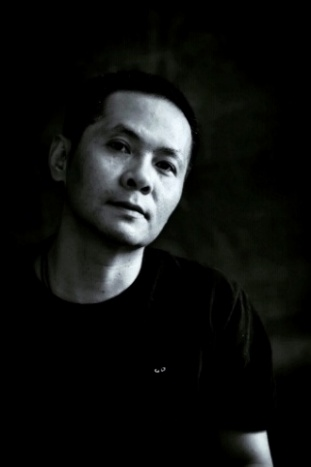
Yi Zhou, born in Xi’an in 1972, the contemporary Chinese novelist, The national committee member of the Chinese Writers Association, has won Lu Xun Literary Prize and various Chinese literary prizes. His works have been selected for inclusion on the “20 Young Writers in the Chinese New Century” list and have so far been translated into English, French, German, Italian and other foreign languages.
About the Translators:
Hu Zongfeng, Robin Gilbank (Refer to the previous introduction)